
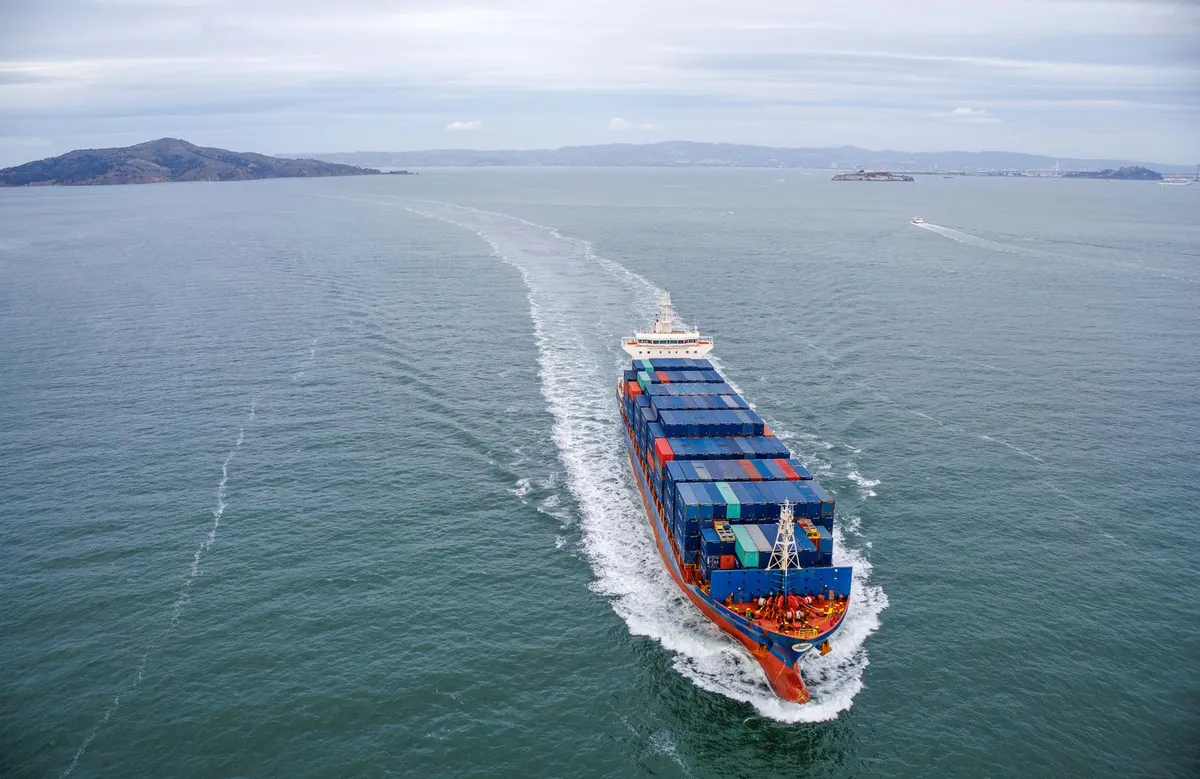
When you ship DDP (Delivered Duty Paid) from China, your freight forwarder handles everything — pickup, export clearance, ocean or air freight, import customs, duties, and last-mile delivery. But “hands-off” does not mean “blind.” Knowing exactly where your cargo is at every stage is what separates importers who sleep well from those who refresh a tracking page at 3 a.m.
This guide explains how DDP shipping tracking actually works, which milestones to watch, which tools to use, and how to set up alerts so you — and your customers — always know what’s happening with your shipment.
Why Tracking Matters More in DDP Shipping Than Any Other Incoterm
Under DDP, your forwarder owns the entire journey. That single point of responsibility is the biggest reason importers choose DDP over alternatives like FOB or CIF — but it also means there are more handoffs, more parties, and more moments where a delay can quietly compound.
Here’s the uncomfortable truth: most DDP shipment problems are discovered by importers weeks after they began. A container that misses its vessel cut-off, a customs inspection that sits unprocessed, a delivery appointment never confirmed — without active tracking, each of these turns into a surprise. With it, you get a two-to-three week head start on the fix.
Tracking also protects you commercially. If you sell on Amazon FBA, run a Shopify store, or supply B2B clients, your delivery promises depend on knowing your real ETA — not the one on the original booking confirmation.
The 8 Key Tracking Milestones in a DDP Shipment
Every DDP shipment from China passes through a predictable sequence. Knowing these milestones tells you not just where your cargo is, but what should happen next — which is the key to spotting trouble early.
1. Factory Pickup and Goods Received
The first milestone is your supplier handing the cargo to the forwarder’s truck at the factory. You should receive confirmation within 24 hours of pickup, including the number of cartons or pallets, gross weight, and measured volume. Discrepancies here are the #1 cause of billing surprises later — if the factory ships 12% more volume than quoted, your DDP rate per kg changes.
2. Export Customs Clearance in China
Your forwarder (or their Chinese agent) files the export declaration. This normally takes 1–3 working days. Once cleared, you’ll get the customs declaration number — this is your first official proof the shipment is legally on its way.
3. Origin Port or Airport Handover
The cargo is delivered to the port terminal or airline warehouse. At this point you’ll receive a Master Bill of Lading (MBL) number for sea freight or an Air Waybill (AWB) number for air freight. Write these numbers down — they are your primary tracking keys for everything that follows.
4. Vessel Departure / Flight Departure
The ship sails or the plane takes off. This is when your forwarder issues the official departure confirmation with the ETD (Estimated Time of Departure) and ETA (Estimated Time of Arrival). Compare the real departure date against the booking — a vessel that departs 5 days late usually signals congestion at the next port too.
5. In-Transit Updates
For ocean freight, most carriers publish vessel positions via AIS satellite data. For air freight, flight status is trackable through airline systems. In practice, DDP forwarders aggregate this for you — a good one proactively flags schedule changes instead of waiting for you to ask.
6. Arrival at Destination Port or Airport
The shipment clears destination border control. For sea freight, container unloading and availability for pickup typically adds 2–5 days after arrival. This milestone is where you confirm the ETA to your customers or your Amazon FBA warehouse booking.
7. Import Customs Clearance and Duty Payment
This is the heart of DDP — your forwarder files the import declaration and pays duties and taxes on your behalf. A professional customs clearance step should complete in 1–3 days for compliant goods. If your shipment sits here longer, ask specifically whether it’s a documentation issue, a tariff classification question, or a physical inspection — each has a very different fix.
8. Final Delivery and Proof of Delivery (POD)
Last-mile delivery to your door, warehouse, or FBA fulfillment center ends with a signed POD. For FBA shipments, the POD must match Amazon’s receiving requirements — a mismatch here can cause Amazon to reject the delivery and charge you redelivery fees.
What Tracking Tools Should You Use?
Your Freight Forwarder’s Dashboard or Updates
The most reliable source is your forwarder. At DDPShipping, every DDP shipment includes proactive milestone notifications — you receive updates at pickup, departure, arrival, customs release, and delivery, without having to ask. If your forwarder only responds when chased, that’s a red flag worth addressing before your next shipment.
Carrier Websites (Backup Layer)
- Sea freight: Enter your MBL number on the carrier’s site (Maersk, COSCO, MSC, CMA CGM, ONE, Hapag-Lloyd). Most now show real-time vessel positions and transshipment schedules.
- Air freight: Enter your AWB number on the airline’s tracking page (e.g., 176-XXXXXXXX for Cathay, 999-XXXXXXXX for Air China) for flight departure, arrival, and transfer scans.
Third-Party Aggregators
Platforms like 17TRACK, ShipGo, or AfterShip pull data from hundreds of carriers into one dashboard. Useful if you manage shipments from multiple forwarders — but for DDP, the forwarder’s own milestones (especially customs status) will always be richer than a carrier API.
How to Set Up Delay Alerts Before Problems Become Crises
Reactive tracking tells you a shipment is late. Proactive tracking tells you it’s going to be late while you can still do something. Set these three checkpoints for every DDP shipment:
- Departure checkpoint: If the vessel or flight hasn’t departed within 3 days of scheduled ETD, ask your forwarder why and get a revised ETA in writing.
- Transit checkpoint: Halfway through the transit, confirm the current vessel/flight is still on schedule. Schedule changes (blank sailings, flight cancellations) almost always show up here first.
- Customs checkpoint: If import clearance exceeds 4 working days, escalate immediately. Under DDP, customs delays are your forwarder’s problem to solve — but your customers still expect you to know about them.
For a realistic picture of how long each leg should take — and which legs are most likely to slip — see our breakdown of how DDP shipping works and the full DDP shipping cost structure, where transit time and pricing interact directly.
DDP Tracking for E-commerce Sellers: Keeping Your Customers in the Loop
If you run a Shopify, WooCommerce, or marketplace store, your customers expect Amazon-style tracking from checkout to doorstep. Here’s how to deliver it with DDP:
- Push milestone events to your store’s tracking page, not just “shipped” and “delivered.” Customers who see “cleared customs in your country” rarely open support tickets.
- Build buffer into promised delivery dates. Quote the forwarder’s realistic ETA plus 3–5 days. With DDP you control duties, so the only variable left is transit — plan for it.
- Proactively message on exceptions. A delay email sent before the customer notices converts a refund request into a loyalty moment. Brands that communicate delays retain 3× more repeat customers than those that go silent, according to post-purchase platform data.
Common Tracking Problems (and Their Real Causes)
| Symptom | Most Likely Cause | What to Do |
|---|---|---|
| “No tracking updates for 10+ days” | Transshipment port congestion or data feed gap | Ask forwarder for vessel AIS position directly |
| “Arrived at port but not cleared customs” | Documentation mismatch or tariff classification review | Provide product specs/HS codes immediately |
| “Out for delivery” for 3+ days | Failed delivery attempt (no one at address, FBA appointment missed) | Confirm delivery window; reschedule with receiver |
| ETA keeps moving forward | Rolling schedule / blank sailing | Re-plan downstream commitments; ask about rail or air alternatives |
The Bottom Line
DDP shipping takes logistics off your plate — but tracking keeps you in control. Watch the eight milestones, set three proactive checkpoints, and choose a forwarder who reports problems before you find them. That’s how DDP becomes not just the simplest way to import from China, but the most predictable one.
Ready to ship with full visibility from factory to door? Get a DDP quote with milestone tracking included on every shipment.