Are you tired of unexpected customs delays, hidden port charges, and complex tax calculations when importing? Navigating FCL DDP Shipping from China to Netherlands shouldn’t be a nightmare. With the right strategy and partner, you can enjoy seamless door-to-door delivery without the stress of border bureaucracies.
If you are an e-commerce seller, a manufacturer, or a large-scale distributor looking to streamline your supply chain, understanding the intricacies of DDP (Delivered Duty Paid) shipping is crucial. In our 10+ years of managing global supply chains at DDPShipping, we’ve helped hundreds of European importers eliminate customs bottlenecks and save thousands on hidden fees. In this comprehensive guide, updated for 2026, we will break down everything you need to know about shipping full containers from China to the Netherlands, covering costs, transit times, customs clearance procedures, and why partnering with DDPShipping is your best logistical decision.
1. What is FCL Sea Freight DDP?
To fully grasp the benefits of this logistics model, we must first break down its two core components: FCL and DDP.
Understanding FCL (Full Container Load)
FCL stands for Full Container Load. Unlike LCL (Less than Container Load), where your goods share space with other shippers’ cargo, FCL means you rent the entire container for your exclusive use. This method is highly recommended when you are shipping large volumes of goods (typically anything over 15 cubic meters).
The most common container sizes used in international shipping are:
- 20-foot container (20’ GP): Ideal for dense, heavy cargo like machinery or tiles. Capacity is around 33 CBM.
- 40-foot container (40’ GP): Better suited for voluminous, lighter cargo like furniture or toys. Capacity is around 67 CBM.
- 40-foot High Cube (40’ HQ): Offers extra vertical space, maximizing volume up to 76 CBM. Perfect for clothing, textiles, and large consumer goods.
Benefits of FCL:
- Lower Risk of Damage: Since the container is sealed at the supplier’s factory in China and only opened at your destination in the Netherlands, the handling of individual cartons is minimized.
- Faster Transit: FCL bypasses the consolidation and deconsolidation processes required for LCL shipments, saving days or even weeks.
- Cost-Effective for High Volumes: When shipping in bulk, the per-unit shipping cost of FCL is significantly lower than LCL.
Understanding DDP (Delivered Duty Paid)
Under the Incoterms 2020 rules, DDP is the ultimate “hassle-free” shipping term for the buyer. It means the seller (or their designated freight forwarder, such as DDPShipping) assumes all responsibilities, risks, and costs associated with transporting the goods from the origin factory in China right to the buyer’s doorstep in the Netherlands.
This includes:
- Export Customs Clearance in China.
- Ocean freight charges.
- Destination port handling charges (THC).
- Import Customs Clearance in the Netherlands.
- Payment of all applicable Duties and Taxes (including Dutch VAT).
- Final inland delivery to your warehouse, Amazon FBA center, or business address.
When you combine FCL and DDP, you get a highly secure, cost-efficient, and hands-off shipping solution. You simply place the order, pay a transparent all-in fee, and wait for the container to arrive at your facility.
2. Why the Netherlands is a Critical Hub for European Imports
The Netherlands is often referred to as the “Gateway to Europe.” When shipping from China, routing your cargo through the Netherlands offers distinct strategic advantages.
The Power of the Port of Rotterdam
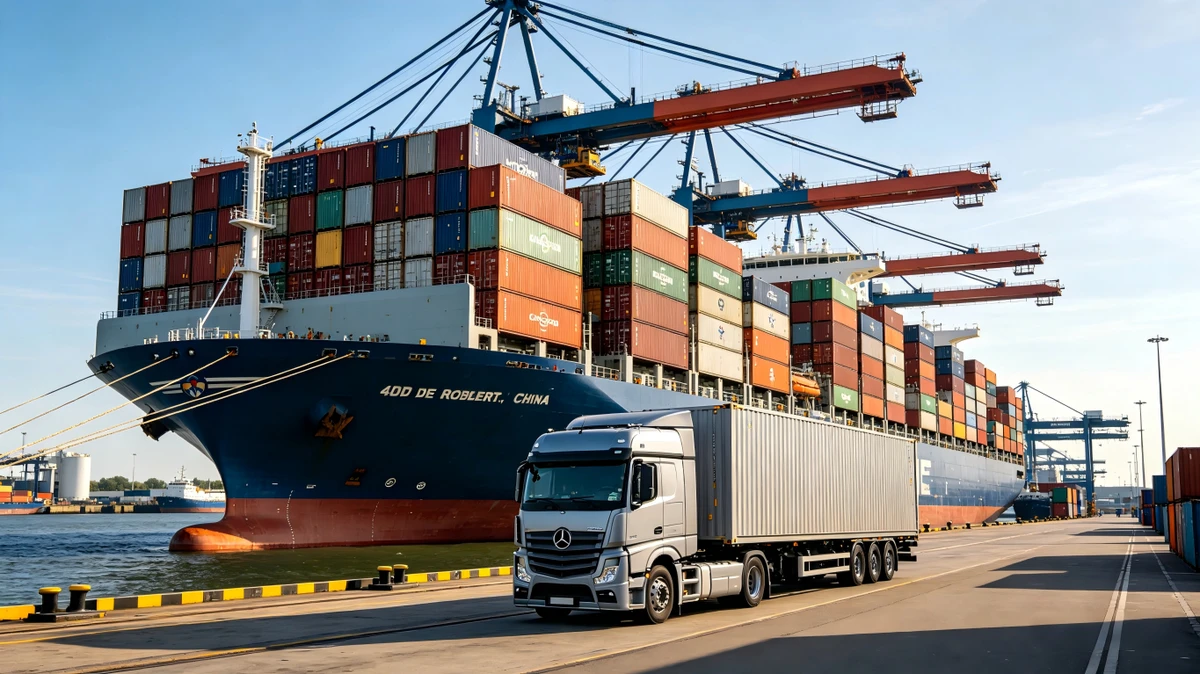
The Port of Rotterdam is the largest seaport in Europe and a global logistical powerhouse. It boasts state-of-the-art automated terminals, deep-water access for the world’s largest mega-ships, and unparalleled connectivity to the rest of the European Union via a dense network of railways, highways, and inland waterways.
When your FCL shipment arrives in Rotterdam, it can be cleared and dispatched to Germany, France, Belgium, or Eastern Europe within 24 to 48 hours.
The Article 23 VAT Deferment System
One of the most attractive reasons to import through the Netherlands is the “Article 23” license. Normally, when goods enter the EU, the importer must pay the Value Added Tax (VAT) immediately at the border. In the Netherlands, standard VAT is 21%. For high-value FCL shipments, paying this upfront can cause significant cash flow issues.
However, the Dutch tax authorities offer a VAT deferment scheme (Article 23). This allows the importer to declare the VAT on their periodic VAT return instead of paying it at the border. Under a DDP arrangement, professional forwarders like DDPShipping utilize their fiscal representation to handle these complexities, ensuring that you don’t face sudden cash flow bottlenecks while keeping the import process fully compliant.
3. Key Ports for China to Netherlands Shipping
Choosing the right port of loading in China can impact your overall transit time and inland transportation costs. Below is a breakdown of the primary ports involved in this trade lane.
| Origin Ports in China | Destination Ports in Netherlands | Characteristics & Best For |
|---|---|---|
| Shanghai Port | Port of Rotterdam | World’s busiest port. Best for goods manufactured in the Yangtze River Delta (Zhejiang, Jiangsu). |
| Shenzhen (Yantian) | Port of Rotterdam | Ideal for electronics, tech goods, and consumer products from the Pearl River Delta (Guangdong). |
| Ningbo-Zhoushan | Port of Rotterdam | Excellent alternative to Shanghai, often less congested. Great for heavy machinery and raw materials. |
| Qingdao Port | Port of Amsterdam | Best for goods from Northern China. Amsterdam handles specific bulk and niche cargo, though Rotterdam remains the primary container hub. |
| Xiamen Port | Port of Rotterdam | Strategic hub for garments, footwear, and specialized manufacturing in Fujian province. |
Note: While the Port of Amsterdam is significant, the vast majority of FCL container traffic from China to the Netherlands goes through the Port of Rotterdam due to its massive infrastructure.
4. Transit Times: How Long Does It Take?
Time is money in international trade. While ocean freight is not as fast as air freight, it is highly reliable. The transit time for FCL Sea Freight DDP from China to Netherlands depends on the specific origin port, the shipping line (e.g., Maersk, MSC, COSCO), and whether the vessel takes a direct route or involves transshipment.
Here is a typical transit time estimation table:
| Shipping Stage | Estimated Time | Description |
|---|---|---|
| Origin Inland Transit & Customs | 3 - 5 Days | Moving empty container to factory, loading, returning to port, and Chinese export clearance. |
| Ocean Freight (Port-to-Port) | 28 - 35 Days | The actual journey on the water from Chinese ports to the Port of Rotterdam. |
| Destination Customs Clearance | 1 - 3 Days | Unloading at Rotterdam, clearing Dutch customs, and processing duty/tax payments. |
| Final Delivery (Door Delivery) | 1 - 4 Days | Trucking or rail transport from Rotterdam to the final address in the Netherlands or neighboring EU countries. |
| Total Door-to-Door Time | 33 - 47 Days | Comprehensive timeframe from supplier’s factory to your warehouse. |
Pro Tip: Peak seasons (such as the weeks leading up to Chinese New Year, Black Friday, or Christmas) can add 7-10 days to these estimates due to port congestion and space roll-overs. Always plan your inventory accordingly.
5. Cost Breakdown: What Are You Paying For?
One of the biggest pain points for importers is the lack of transparency in freight pricing. A major advantage of DDP shipping is that you receive an all-inclusive rate. However, as an expert importer, it is vital to understand what components make up that final price.
- Base Ocean Freight: The cost charged by the shipping line for moving the container across the ocean. This fluctuates based on market demand, fuel prices (BAF), and currency adjustments (CAF).
- Origin Charges: Trucking from the Chinese factory to the port, terminal handling charges (THC), documentation fees (like the Bill of Lading), and export customs declaration fees.
- Destination Charges: Unloading the container in Rotterdam, European THC, port security fees, and temporary storage if required.
- Customs Duties: Calculated based on the HS (Harmonized System) code of your product. Duties in the EU can range from 0% (for certain electronics) to over 10% (for textiles or footwear).
- Value Added Tax (VAT): As mentioned, the standard Dutch VAT is 21%, calculated on the CIF value of the goods plus the duties.
- Last-Mile Delivery: The cost of the truck chassis delivering the heavy container to your warehouse.
Estimated FCL Pricing (China to Netherlands)
Disclaimer: Freight rates are highly volatile. The figures below are rough estimates for educational purposes, updated for the 2026 shipping market. For exact, real-time rates, always request a custom quote from our team.
| Container Type | Estimated Port-to-Port | Estimated Door-to-Door (DDP) | Best Suited For |
|---|---|---|---|
| 20’ GP | $1,200 - $2,000 | $3,500 - $5,500* | Heavy, dense goods (metal parts, tiles) |
| 40’ GP / HQ | $1,800 - $3,000 | $5,000 - $8,000* | Voluminous goods (furniture, apparel, toys) |
*DDP prices vary wildly depending on the exact value of the cargo (which dictates duties and taxes) and the final delivery address distance from Rotterdam.
6. The Customs Clearance Process in the Netherlands
Navigating EU customs requires precision. A single mistake in paperwork can lead to costly delays, storage fees, or even the seizure of goods. Under a DDP agreement, DDPShipping handles this entirely, but here is what happens behind the scenes:
1. Document Preparation
Before the vessel even arrives in Rotterdam, your forwarder submits the necessary documentation to Dutch customs. This includes:
- Commercial Invoice: Detailing the buyer, seller, goods description, and value.
- Packing List: Exact weights, dimensions, and carton counts.
- Bill of Lading (B/L): The official contract of carriage.
- Certificate of Origin: Required for certain tariff reductions.
- CE Marking Certificates: Crucial for electronics, toys, and machinery entering the EU.
2. HS Code Classification & CBAM Compliance
Every product has a specific HS code. Dutch customs uses this code to determine the import Duties. Misclassifying a product to pay lower duties is a severe offense that can result in massive fines. According to the Customs Administration of the Netherlands, strict adherence is non-negotiable. Furthermore, with the recent implementation phases of the EU’s Carbon Border Adjustment Mechanism (CBAM), importing goods like iron, steel, or aluminum requires additional carbon emissions reporting. Our compliance team ensures your goods are classified accurately and meet all emerging EU environmental regulations.
3. Inspection (If Flagged)
Dutch customs employs advanced risk-analysis algorithms. If your container is flagged, it may undergo an X-ray scan or a physical inspection. Having a reputable customs broker significantly reduces the likelihood of unnecessary holds.
4. Release and Dispatch
Once duties and taxes are settled (or deferred via Article 23), the container is released. It is then mounted onto a truck chassis and driven directly to your facility.
7. Common Pitfalls and How to Avoid Them
Even with FCL Sea Freight DDP, things can go wrong if you partner with an inexperienced logistics provider. Watch out for these common traps:
- The “Fake DDP” Trap: Some forwarders quote a “DDP” price that actually excludes destination VAT or specific port fees. When the cargo arrives, the buyer is held hostage with unexpected invoices. Always ensure your contract explicitly states that all Duties, Taxes, and destination handling fees are included.
- Inadequate Packaging: The sea journey is rough. Containers experience high humidity and violent swaying. Ensure your supplier in China uses export-grade pallets, moisture-absorbing desiccants, and proper lashing inside the FCL container.
- Compliance Failures: Attempting to import non-compliant goods (e.g., electronics without valid CE certificates) into the Netherlands will result in the cargo being destroyed or shipped back at your expense.
Expert Tip: Our DDP Pre-Shipment Checklist
Before you approve loading at the Chinese factory, we recommend running through our proprietary 3-point check:
- Documentation Match: Does the Commercial Invoice perfectly match the Packing List and the physical cargo? (Even a 1kg discrepancy can trigger a customs hold in Rotterdam).
- CE & RoHS Verification: Are all European safety certificates valid and verifiable by Dutch authorities?
- Incoterm Clarity: Does your supplier contract explicitly state “DDP Destination Address” rather than just “DDP Rotterdam”? (This prevents last-mile delivery disputes).
8. Why DDPShipping is Your Ultimate Logistics Partner
Shipping from China to Europe is a complex puzzle, but you don’t have to solve it alone. At DDPShipping, we specialize in providing flawless FCL Sea Freight DDP from China to Netherlands.
Here is why hundreds of European importers trust us with their supply chains:
- True Door-to-Door DDP: We mean what we say. Our quotes are 100% all-inclusive. No hidden fees, no surprise invoices at the destination port.
- In-House Customs Expertise: We have dedicated customs brokers in both China and the Netherlands. We navigate HS codes, CE compliance, and VAT deferment smoothly.
- Guaranteed Space: Through our strong relationships with premium ocean carriers (Maersk, MSC, Evergreen), we secure container space even during peak seasons.
- End-to-End Tracking: Visibility is key. We provide real-time updates from the moment the container leaves the Chinese factory to the moment it arrives at your Dutch warehouse.
Conclusion
Opting for FCL Sea Freight DDP from China to Netherlands is one of the smartest logistical choices an importer can make. It combines the cost-effectiveness and security of full container shipping with the peace of mind of a fully managed, duty-paid delivery.
By understanding the transit times, cost structures, and the strategic importance of the Port of Rotterdam, you can optimize your inventory flow and boost your bottom line. Most importantly, by partnering with a reliable expert like DDPShipping, you can focus entirely on growing your business while we handle the heavy lifting.
Ready to simplify your supply chain? Contact DDPShipping today for a transparent, no-obligation FCL DDP quote and let us move your cargo seamlessly from China to the Netherlands.