
FCL Sea Freight DDP from China to USA is rapidly becoming the preferred shipping method for importers who want predictable costs and hands-free customs clearance. With Section 301 tariffs, port congestion, and rising air freight rates reshaping global trade in 2026, moving a full container under Delivered Duty Paid terms eliminates the guesswork from your supply chain.
In this guide, you will learn exactly how the FCL DDP process works, what you will pay at every stage, how to choose a reliable forwarder, and how to avoid the costly mistakes that trap first-time shippers. Whether you are moving your first 20-foot container or scaling to monthly 40HQ shipments, this is the only resource you need.
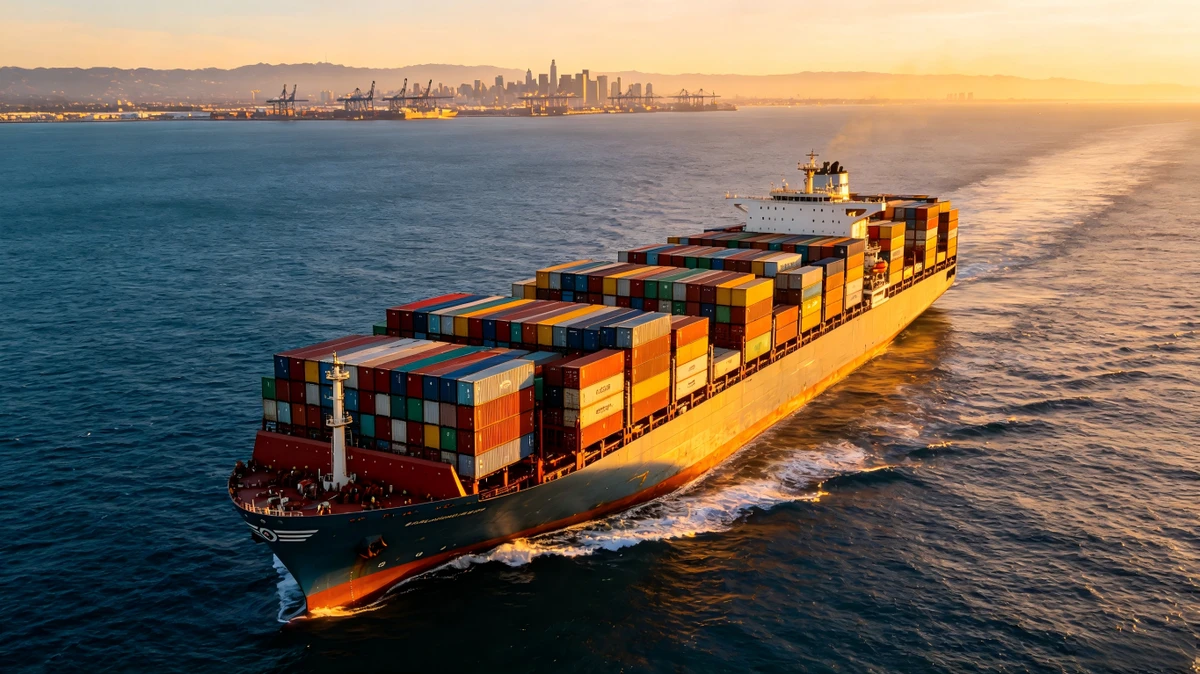
What Is FCL Sea Freight DDP from China to USA?
Defining FCL and DDP
FCL (Full Container Load) means you book an entire shipping container exclusively for your cargo. Unlike LCL (Less than Container Load), where your goods share space with other shippers, FCL gives you complete control over the container from the moment it is loaded until it reaches your door.
DDP (Delivered Duty Paid) is an Incoterms 2020 rule that places maximum responsibility on the seller �?or, in practice, your freight forwarder. Under DDP, the forwarder handles everything from factory pickup in China through export clearance, ocean freight, U.S. customs entry, duty payment, and final inland delivery to your warehouse. You receive one all-inclusive invoice. No separate duty bills. No surprise storage fees. At DDPShipping, our flagship DDP Shipping from China to USA service is built around this exact model.
What Is Included in a True FCL DDP Service?
A genuine door-to-door FCL DDP quote covers:
- Pickup from supplier warehouse in China
- China export customs declaration
- Ocean freight main carriage (port to port)
- ISF 10+2 security filing
- U.S. customs clearance and brokerage
- Import duties, taxes, and Section 301 tariffs
- Port drayage (container retrieval from terminal)
- Inland transportation (rail or truck)
- Final delivery to your U.S. address
If any of these line items is missing from your quote, you do not have true DDP. You have a budget estimate with holes in it. For a complete overview of all ocean transport options, see our Sea Freight DDP Shipping from China hub.
Key Terminology You Need to Know
Before we move forward, let us clarify the terms that will appear throughout this guide:
- Importer of Record (IOR): The legally responsible party for declaring goods to CBP. In most FCL DDP arrangements, your forwarder or their U.S. partner acts as the IOR. Important: The IOR is liable for the accuracy of every declaration. If CBP issues a penalty for misclassification or undervaluation, the IOR bears the legal and financial responsibility �?another reason to choose a forwarder with deep customs expertise.
- US Customs and Border Protection (CBP): The federal agency that inspects and clears all cargo entering the United States. Under DDP terms, your forwarder manages Customs Clearance on your behalf.
- Bill of Lading (B/L): The contract between shipper and carrier that also serves as proof of cargo receipt.
- ISF 10+2: The Importer Security Filing required 24 hours before cargo departs China. Late filings carry penalties of $5,000 or more.
- HS Code Classification: The Harmonized System code that determines your duty rate. One wrong digit can change your cost structure by 25%.
- Harbor Maintenance Fee (HMF) and Merchandise Processing Fee (MPF): Mandatory U.S. port and customs fees added to every ocean shipment.
Container Types at a Glance
Choosing the right equipment is the first step to controlling cost.
| Container Type | Internal Volume | Payload Limit | Best For |
|---|---|---|---|
| 20GP (20-foot standard) | ~28 CBM | ~22,000 kg | Heavy machinery, dense goods, small batches |
| 40GP (40-foot standard) | ~58 CBM | ~27,000 kg | General cargo, mixed pallets |
| 40HQ (40-foot High Cube) | ~68 CBM | ~27,000 kg | Bulky items, e-commerce inventory, furniture |
For most e-commerce and wholesale importers, the 40HQ offers the best cost-per-unit ratio because the extra foot of height adds nearly 10 CBM of usable space without increasing the base ocean freight rate proportionally.
Why Choose FCL DDP? FCL DDP vs LCL DDP vs FOB
FCL DDP vs LCL DDP
If you are currently using LCL, you might be closer to an FCL upgrade than you think.
| Factor | FCL DDP | LCL DDP |
|---|---|---|
| Cost per CBM | Lower at scale | Higher per unit |
| Transit time | 25�?5 days door-to-door | 30�?5 days (consolidation adds time) |
| Cargo damage risk | Very low (sealed container) | Higher (handling at CFS) |
| Customs complexity | Single consignee, simpler | Multiple consignees, split clearance |
| Minimum volume | 1 full container | 1 CBM |
| Best for | 10+ CBM or 2,000+ kg | 1�?0 CBM shipments |
The break-even point is typically around 15 CBM. If your monthly volume is approaching that threshold, FCL DDP will almost always save money and reduce headaches.
FCL DDP vs FOB
Under FOB (Free On Board), your supplier only gets the goods onto the vessel in China. You become responsible for ocean freight, U.S. customs, duties, drayage, and delivery. That sounds simple until you start adding up the hidden costs:
- Customs broker fee: $150–$300 per entry
- Annual customs bond: $300–$500
- Port drayage: $300–$800
- Chassis rental: $30–$60 per day
- Demurrage and detention: $150–$350 per day if you miss free time
- Duties and Section 301 tariffs: often 15�?0% of product value
With FCL DDP, those variables disappear into one fixed price. For SMEs and Amazon sellers without a dedicated logistics team, that predictability is worth more than the small premium a forwarder charges for coordination.
When FCL DDP Is Not Ideal
Transparency means telling you when not to use this service. FCL DDP is usually the wrong choice if:
- You ship ultra-high-value electronics that require your company to be the official IOR for warranty or recall reasons.
- Your product is heavily regulated by FDA, FCC, or CPSC and requires pre-clearance documentation that only your U.S. entity can file.
- You want to nominate your own ocean carrier and specific sailing schedule every month.
For everyone else �?B2B importers, wholesale distributors, Amazon FBA sellers, and growing DTC brands �?FCL DDP is the most efficient way to scale. If speed is more important than volume, consider our Air Freight DDP Shipping from China to USA service for deliveries in 5�? days.
The Complete FCL DDP Shipping Process Step by Step
Understanding the flow helps you plan inventory and spot delays before they happen.
Step 1: Quote Request and Booking
Send your forwarder:
- Product name and HS code
- Preferred container type (20GP, 40GP, or 40HQ)
- Supplier address in China
- Destination ZIP code or warehouse address in the USA
- Desired sailing week
A professional FCL DDP freight forwarder will return an all-inclusive quote within 24 hours.
Step 2: Factory Pickup and Container Loading
The forwarder arranges an empty container delivery to your supplier’s warehouse. Loading typically takes 2�? hours. In our experience managing thousands of China-origin FCL loads, poor loading is the leading cause of cargo damage and customs exams. We strongly recommend hiring a loading supervisor or asking your forwarder to provide one. A container rejected at the weighbridge because of uneven weight distribution can cost more than the supervisor’s fee.
Step 3: China Export Customs Clearance
Your supplier provides the Commercial Invoice and Packing List. The forwarder’s China team files the export declaration. This step usually completes within 1�? business days.
Step 4: Ocean Main Carriage
The vessel departs from major Chinese ports such as Shanghai, Shenzhen, Ningbo, or Guangzhou. Transit times vary by route:
| Route | Port-to-Port Days | Door-to-Door Estimate |
|---|---|---|
| Shanghai �?Los Angeles / Long Beach | 14�?8 | 25�?2 |
| Shenzhen �?Los Angeles / Long Beach | 12�?6 | 24�?0 |
| Shanghai �?New York / New Jersey | 25�?0 | 38�?5 |
| Ningbo �?Savannah | 28�?2 | 38�?2 |
| Ningbo �?Houston | 25�?0 | 35�?2 |
Carrier choice matters. Matson offers the fastest Trans-Pacific service (as fast as 11 days to Long Beach) but at a premium. COSCO, MSC, and Maersk provide broader schedule coverage and lower base rates for cost-sensitive shippers. When even the fastest ocean lane is too slow, our Air Freight DDP Shipping from China service delivers in under a week.
Step 5: ISF 10+2 Filing
At least 24 hours before the vessel departs China, your forwarder must submit the Importer Security Filing to CBP. The “10+2” refers to 10 data elements from the importer and 2 from the carrier. Missing or late ISF filings trigger automatic $5,000 penalties and increase your exam risk.
Step 6: US Customs Clearance
Upon arrival, the forwarder’s U.S. customs broker files a Formal Entry (CBP Form 7501) and pays duties under the Importer of Record’s bond. CBP may release the container immediately, select it for a VACIS non-intrusive scan, or flag it for an Intensive Exam. The latter can add 3�? days and $300–$1,000 in exam fees.
Step 7: Port Drayage
A drayage truck retrieves the container from the port terminal and moves it to a nearby rail yard or deconsolidation warehouse. Drayage is a hidden bottleneck at Los Angeles/Long Beach during peak season, which is why some shippers route through Vancouver or Prince Rupert instead.
Step 8: Inland Transport and Final Delivery
From the port or rail ramp, your cargo moves to its final destination by IPI rail (for Midwest and Texas), FTL trucking (direct, fastest), or LTL (if deconsolidating for multiple delivery points). For Amazon FBA, the forwarder schedules a delivery appointment through the CARP system and ensures palletization meets Amazon’s strict requirements.
FCL DDP Shipping Rates from China to USA (2026)
No one likes surprise invoices. Here is what drives your landed cost.
Cost Drivers
- Ocean freight base rate: Fluctuates weekly based on supply and demand.
- Bunker Adjustment Factor (BAF): Fuel surcharge passed on by carriers.
- Terminal Handling Charges (THC): Origin and destination port fees.
- Customs clearance and brokerage: Forwarder’s fee for filing and coordination.
- Duties and taxes: Standard HTS rate + Section 301 additions + any anti-dumping duties.
- Inland delivery: Drayage + rail or trucking to final address.
2026 Indicative DDP Rate Ranges
The following table reflects all-in door-to-door pricing for general, non-hazardous cargo as of mid-2026. Actual quotes depend on product type, exact origin/destination, and current market conditions. DDPShipping provides fully itemized quotes with no hidden fees �?every line item below is disclosed upfront before you book.
| Container | To US West Coast | To US East Coast | To US Midwest (via IPI) |
|---|---|---|---|
| 20GP | $3,200 �?$4,800 | $4,500 �?$6,200 | $4,800 �?$6,500 |
| 40GP | $4,000 �?$5,800 | $5,800 �?$7,800 | $6,200 �?$8,200 |
| 40HQ | $4,200 �?$6,000 | $6,000 �?$8,000 | $6,400 �?$8,400 |
Rates include ocean freight, THC, customs clearance, standard duties, and inland delivery to a commercial address within 100 miles of the destination port or ramp. Anti-dumping duties, intensive exams, and residential delivery surcharges are excluded.
Sample DDP Price Breakdown (40HQ, Ningbo �?Chicago)
| Line Item | Amount |
|---|---|
| Ocean freight + BAF | $2,800 |
| Origin THC | $250 |
| U.S. customs clearance + brokerage | $350 |
| Duties & Section 301 (estimated 25%) | $2,100 |
| Drayage (Los Angeles) | $450 |
| IPI rail to Chicago | $950 |
| Final mile delivery | $350 |
| All-in DDP Estimate | ~$7,250 |
How to Lock in the Best Rates
- Book 2�? weeks ahead for standard lanes.
- Sign a quarterly contract if you ship more than one container per month.
- Avoid peak season (August through October) unless you book space 4�? weeks early.
- Optimize container fill. A half-empty 40HQ costs nearly the same as a full one.
US Inland Delivery: From Port to Your Door
Most guides stop at the port. That is where this one starts.
Drayage: The First Mile on U.S. Soil
Drayage moves your container from the port terminal to a rail yard or warehouse. In Los Angeles, drayage can cost $350–$600 and take 1�? days depending on terminal congestion. Chassis shortages during peak season can double both cost and time.
Intermodal Rail (IPI): The Inland Backbone
For destinations beyond the coasts, IPI (Interior Point Intermodal) rail is the most economical option. Major ramps include Chicago, Dallas, Memphis, Kansas City, and Columbus.
| Routing Method | Transit Time to Chicago | Typical Cost |
|---|---|---|
| All-water to NY/NJ + truck | 30�?5 days | Higher |
| West Coast + IPI rail | 35�?2 days | Lower |
If your warehouse is in the Midwest or Texas, routing through Los Angeles or Seattle and transferring to rail is often $800–$1,500 cheaper than discharging on the East Coast.
FTL vs LTL Trucking
- FTL (Full Truckload): Direct delivery after deconsolidation. Fastest. Best if you are unloading an entire container at one address.
- LTL (Less-than-Truckload): Cost-effective if you are splitting a container across multiple regional warehouses.
Amazon FBA Warehouse Delivery
Amazon does not act as your Importer of Record. Your forwarder must:
- Deliver to specific FCs (ONT8, LGB8, LAX9, FTW1, IND9, ABE8)
- Schedule appointments through the CARP system
- Provide GMA-standard pallets (40” × 48”), max 72” height
- Ensure carton weight stays under 50 lbs
An experienced FCL DDP freight forwarder handles all of this as part of the service.
West Coast Congestion Alternatives
When Los Angeles gridlocks, smart shippers pivot:
- Vancouver / Prince Rupert entry + BNSF/UP rail to Chicago
- Savannah / Charleston as East Coast alternatives to New York/New Jersey
- Seattle / Tacoma for the shortest Trans-Pacific route to the Pacific Northwest
For businesses with multi-country North American distribution, our DDP Shipping from China to Canada route leverages the same West Coast gateways for seamless cross-border coverage.
Container Loading Guide: Maximize Space and Protect Cargo
A poorly loaded container is an expensive container.
Volume Calculation by Type
Use this formula to estimate capacity:
Cartons per container = (Container CBM × 0.85) ÷ Carton CBM
The 0.85 factor accounts for irregular shapes and lost space.
| Container | Usable CBM | Example: 0.08 CBM carton |
|---|---|---|
| 20GP | ~24 CBM | ~255 cartons |
| 40GP | ~49 CBM | ~520 cartons |
| 40HQ | ~58 CBM | ~615 cartons |
Weight vs Volume: Do You Cube Out or Weigh Out?
- Cube out = you fill the space before hitting the weight limit. Common with furniture, textiles, and light consumer goods.
- Weigh out = you hit the payload limit with space remaining. Common with tile, metal products, and machinery.
Most e-commerce shippers cube out in a 40HQ. If you weigh out, a 20GP might be more cost-efficient.
Loading Sequence and Weight Distribution
- Place heavy cartons on the floor, centered over the axles.
- Stack lighter items toward the top and rear doors.
- Keep weight balanced left-to-right to avoid container rejection at the weighbridge.
- Never exceed the container’s maximum payload (printed on the door).
Cargo Securing Methods
- Lashing straps: Ratchet straps anchored to container lashing rings.
- Dunnage bags: Inflatable bags that fill gaps and prevent shifting.
- Corner protectors: Prevent strap damage on fragile edges.
- Plywood dividers: Separate mixed-SKU loads for easier unloading.
Marking and Labeling Requirements
Every carton should display:
- Shipper name and address
- Consignee name and U.S. destination
- Container number
- Gross weight and dimensions
- Handling instructions (e.g., “This Side Up”)
For Amazon FBA, each carton also needs the Amazon-generated shipment ID label and FNSKU barcodes on every sellable unit.
Common Loading Mistakes
- Uneven weight distribution causing truck scale violations
- Inadequate securing leading to damage and costly customs exams
- Missing backup copies of the Commercial Invoice and Packing List inside the container
- Overlooking the container seal: CBP treats a broken or mismatched seal as a high-security risk. Always photograph the seal number before the container leaves the factory and verify it matches the Bill of Lading.
Customs, Duties, and Section 301 Tariffs Explained
Required Documents for FCL DDP
Your forwarder manages most paperwork, but you still need to supply accurate information.
| Document | Provided By | Purpose |
|---|---|---|
| Commercial Invoice | Supplier | Declares value, quantity, and description |
| Packing List | Supplier | Details weight, dimensions, and contents per carton |
| Bill of Lading | Carrier | Contract of carriage and cargo receipt |
| ISF 10+2 | Forwarder | CBP security filing |
| CBP Form 7501 | Customs Broker | Formal duty declaration |
| Certificate of Origin | Supplier (if needed) | Trade agreement or quota verification |
HS Code Classification Basics
The first six digits of your HS Code are universal. The last four U.S. digits determine your precise duty rate. Misclassification is the number one cause of unexpected duties and CBP exams. If your forwarder cannot explain why they chose a specific code, find a new forwarder.
Section 301 Tariffs (2026 Update)
Since 2018, Section 301 has imposed additional duties on most goods manufactured in China. As of 2026, the rates are:
- List 1�? products: additional 25%
- List 4A products: additional 7.5%
- Certain exclusions expired; check the latest USTR notices for your category.
These tariffs are in addition to the standard HTS rate. In a true DDP quote, your forwarder calculates the total duty burden and rolls it into the all-in price.
Anti-Dumping Duties (ADD)
Some product categories carry Anti-Dumping Duties that can dwarf standard tariffs:
| Product Category | Potential ADD Rate |
|---|---|
| Solar panels | 30�?50% |
| Steel and aluminum | 0�?66% |
| Wooden bedroom furniture | 0�?98% |
| Ceramic tiles | 0�?56% |
If you import any of these, verify ADD liability before accepting a DDP quote. A forwarder who glosses over this is dangerous.
CBP Examination Types and Risk Reduction
- VACIS (Non-Intrusive): X-ray scan. Usually 24�?8 hours. Minimal cost.
- CET (Contraband Enforcement Team): Partial unload and inspect. 2�? days.
- Intensive Exam: Full unload at a CES facility. 5�?0 days. $300–$1,000+.
Best practices to minimize exam risk:
- Declare accurate, market-realistic values.
- Use consistent HS codes across shipments.
- Avoid suppliers with a history of CBP violations.
- File ISF on time, every time.
- Pro tip from our brokerage team: Shipments valued at round numbers (e.g., exactly $10,000.00) or with drastic valuation changes from previous entries are statistically more likely to trigger a CET hold. Use precise, documented valuations.
Bonded Warehouse and FTZ Options
Advanced importers sometimes use a Bonded Warehouse or Foreign Trade Zone (FTZ) to defer duty payment until goods leave the facility. This is not DDP, but it is worth knowing if your volume justifies a more sophisticated customs strategy.
How to Choose the Best FCL DDP Freight Forwarder from China to USA
Not every forwarder who claims to offer DDP actually delivers it. Here is how to separate professionals from pretenders.
10-Point Evaluation Checklist
- FMC / NVOCC license verification �?Ask for their FMC license number and verify it on the Federal Maritime Commission website.
- Proven China-U.S. FCL DDP track record �?Request references from clients in your industry.
- U.S.-based licensed customs broker �?Either on staff or under a formal partnership agreement.
- Transparent all-in quoting �?Every fee (THC, chassis, exam, detention) should be visible or explicitly disclosed.
- Real-time tracking �?Container-level visibility from China to your door.
- Amazon FBA delivery experience �?If you sell on Amazon, this is non-negotiable.
- Cargo insurance options �?All-risk coverage for high-value shipments.
- Payment terms flexibility �?Avoid forwarders who demand 100% prepayment before pickup.
- Physical presence in both countries �?Offices or warehouses in China and the USA.
- Clear English communication �?Your point of contact must be able to explain customs issues in detail.
6 Red Flags to Avoid
- Quotes 30% or more below market rate (usually means corners are being cut).
- No verifiable U.S. business address or broker license.
- Requires 100% payment before the container is even picked up.
- Cannot explain how duties are calculated or which HTS codes apply.
- No tracking system beyond a generic carrier website.
- Vague about who serves as the Importer of Record.
Why DDPShipping Is the Right Partner
DDPShipping was built specifically for global DDP door-to-door logistics. Our DDP Shipping from China to the Americas coverage connects Chinese suppliers to commercial warehouses and Amazon FBA centers across the United States, Canada, and Mexico. We do not treat DDP as an add-on service �?it is our core competency.
- All-inclusive rates with zero hidden fees. What we quote is what you pay.
- End-to-end customs clearance and duty payment handled by our licensed U.S. brokerage team.
- Stable transit times on major China-U.S. lanes, with express Matson options when speed matters.
- Amazon FBA-compliant delivery, labeling, and appointment scheduling included as standard.
If you are ready to stop guessing and start shipping with confidence, get in touch for a free, itemized FCL DDP quote.
Real Case Studies: FCL DDP in Action
Case Study 1 �?Furniture Importer (40HQ DDP, Dongguan to Los Angeles)
Background: A California-based furniture retailer imported 3,000 units monthly from a supplier in Dongguan. They were using LCL plus a separate customs broker under FOB terms.
Challenge: LCL shipments arrived with damaged corners, consolidation delays added 10�?4 days, and landed costs fluctuated by 15% month to month due to variable duty bills and broker fees.
Solution: They switched to a monthly 40HQ FCL DDP arrangement. We handled factory pickup, loading supervision, ocean freight, U.S. customs clearance, and direct delivery to their 3PL in Ontario, CA. For clients needing short-term storage or transloading, our Warehouse Services integrate directly with the final delivery leg.
Results:
- 23% total cost savings versus their previous LCL-plus-FOB model.
- 32-day consistent door-to-door transit time.
- Zero customs surprises �?one fixed invoice, no back-billed duties.
Case Study 2 �?Electronics Wholesaler (20GP DDP, Ningbo to Chicago)
Background: A Midwest electronics distributor replenished inventory every six weeks from a factory near Ningbo.
Challenge: Peak season capacity crunch in Q3 meant they faced rolling cancellations and 40% rate spikes on the spot market.
Solution: We moved them to a 20GP FCL DDP contract routed Ningbo to Los Angeles, then via BNSF intermodal rail to a ramp near Chicago. The booking was locked three weeks ahead of sailing.
Results:
- Contract rate locked before the October surcharge window.
- 38-day total transit including rail, reliably repeatable.
- Inland cost savings of $1,100 per container versus East Coast discharge plus trucking.
Seasonal Planning and Market Tips for 2026
Peak Season (August to October)
In our experience, Trans-Pacific capacity tightens every fall as retailers stock inventory for the holidays. FCL rates can spike 20�?0%, and space becomes scarce. We advise our clients to book August and September sailings by early July to avoid roll-overs.
Chinese New Year (January to February)
Factories typically shut down for 2�? weeks. The last reliable sailings depart around January 15. If you need inventory in U.S. warehouses by March 1, your cargo should be on the water by January 10 at the latest.
Post-Tariff Volatility
New tariff announcements can freeze the spot market for 7�?0 days as carriers and forwarders recalculate. If you operate on thin margins, request a 30-day rate validity in writing and avoid quoting retail prices based on spot rates.
Rate Locking Strategies
- Spot market: Best for one-off shipments. High volatility.
- Short-term contract: 3-month fixed rate with volume commitment. Best for growing importers.
- Annual contract: Lowest per-unit rate. Requires forecast accuracy and volume guarantees.
2026 Market Outlook
Trans-Pacific capacity is expected to grow modestly in 2026, but port labor negotiations and fuel price volatility will keep rates unpredictable. Shippers who build strong forwarder relationships and plan 4�? weeks ahead will outperform those who chase the lowest spot rate.
Frequently Asked Questions
How long does FCL DDP shipping take from China to USA?
West Coast destinations typically see 25�?5 days door-to-door. East Coast ranges from 35�?5 days. Midwest delivery via IPI rail usually lands between 35�?2 days total.
How much does a 40ft container DDP from China to USA cost?
For general cargo in mid-2026, expect roughly $4,200–$6,000 to the West Coast and $6,000–$8,000 to the East Coast, all-in. Product type, exact origin, and market conditions will move the needle.
What is the cheapest way to ship FCL DDP from China to USA?
Book early, avoid August through October if possible, fill your container to 85% or more of usable volume, and route through the West Coast plus IPI rail for inland destinations instead of all-water to the East Coast.
Do I need a customs broker for FCL DDP shipping?
No. A true DDP forwarder includes licensed customs brokerage in the service. You do not hire or pay a broker separately.
Can I use FCL DDP for Amazon FBA?
Yes. Ensure your forwarder understands Amazon’s pallet, labeling, weight, and appointment requirements.
What documents are needed for FCL DDP from China to USA?
You provide the Commercial Invoice and Packing List. Your forwarder handles the Bill of Lading, ISF 10+2, and CBP Entry Summary. A Certificate of Origin is only needed for specific trade agreements.
Are Section 301 tariffs included in DDP shipping quotes?
In a legitimate DDP quote, yes. Always confirm the HTS code your forwarder is using and ask for the estimated duty percentage in writing.
What happens if CBP inspects my FCL container?
Your forwarder manages the exam. Costs range from $300 to over $1,000, and delays are typically 2�? days. Reputable DDP forwarders either include exam coverage in the quote or disclose the pass-through rate upfront.
Is cargo insurance included in FCL DDP?
Usually not. Carrier liability is minimal. Request all-risk Cargo Insurance for shipments valued above $10,000.
Who is the Importer of Record in FCL DDP?
Typically the forwarder or their U.S. entity. Verify this in writing before booking, especially if you need customs entry copies for tax or warranty purposes.
Conclusion
FCL Sea Freight DDP from China to USA is the most predictable, hands-off way to move full containers across the Pacific �?but only when your forwarder truly understands every leg of the journey.
Here is what to remember:
- Lock in rates early, especially if you ship during peak season.
- Demand a fully itemized quote so you know exactly what is covered.
- Choose a forwarder with licensed U.S. customs brokers, real China operations, and transparent IOR policies.
DDPShipping specializes in global DDP door-to-door service. We quote all-inclusive rates with no hidden fees, handle customs clearance and duty payment end to end, and deliver on time to commercial warehouses and Amazon FBA centers across the United States.
Ready to see your exact landed cost? Contact DDPShipping today for a free, itemized FCL DDP quote �?and know precisely what you will pay before your container ever leaves the factory floor.