
Imagine finally receiving your long-awaited shipment from China, only to discover that the “cheap” freight quote your supplier arranged comes with a £1,800 surprise bill for destination handling, customs storage, and demurrage. Your goods sit at Felixstowe for eleven days because you do not have a customs broker, and every day adds more fees. This story is not hypothetical. It is exactly what happened to a Manchester-based Shopify seller who chose CIF terms instead of LCL Ocean DDP Shipping from China to UK. In June 2026, ocean freight markets are volatile, Brexit-era customs rules remain complex, and the gap between a flashy port-to-port rate and your real landed cost has never been wider. This guide will show you how LCL DDP (Less than Container Load, Delivered Duty Paid) eliminates those surprises, what you will actually pay door to door, and how to move your cargo from Shanghai or Shenzhen to your UK warehouse without touching a customs form.
You will learn the true anatomy of DDP pricing, how UK VAT and post-Brexit customs declarations work, when to choose LCL over FCL, and the hidden risks that catch first-time importers off guard. Whether you run an Amazon FBA business, a wholesale import operation, or a growing e-commerce brand, the information here will save you money, time, and stress.
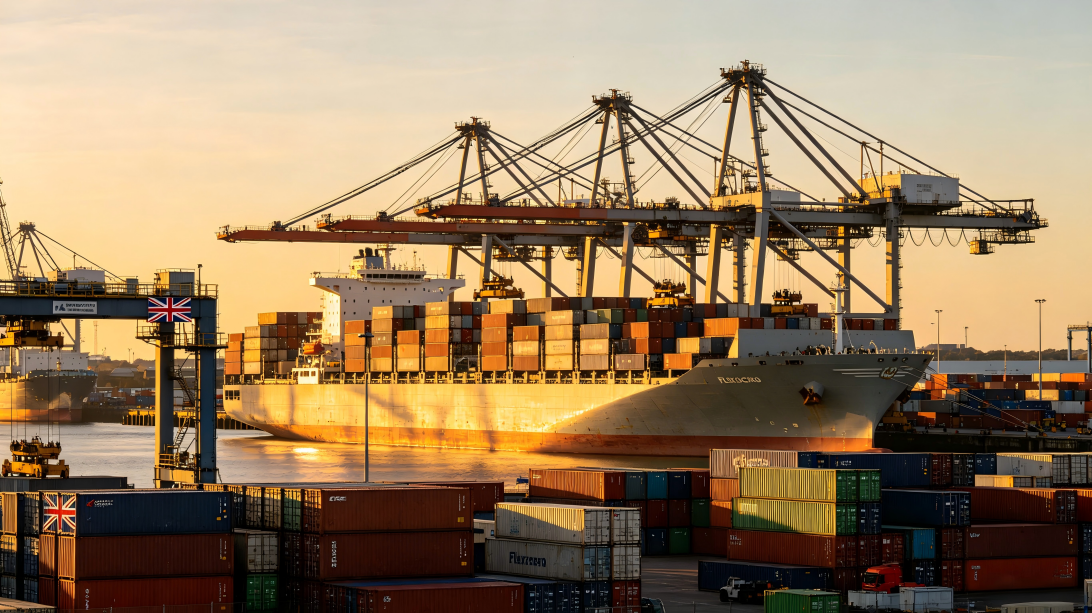
What Is LCL Ocean DDP Shipping From China to UK?
LCL: Shared Space, Shared Savings
LCL, or Less than Container Load, means your cargo shares a standard ocean container with shipments from other exporters. Instead of paying for an entire 20-foot or 40-foot box, you rent only the space you use, measured in CBM (cubic meters) or Revenue Tons (W/M, weight or measure). LCL is the practical choice for shipments between roughly 1 and 13 CBM, which covers everything from a few pallets of electronics to a test batch of furniture for a new product line.
Because your goods are consolidated at a CFS (Container Freight Station) in China and deconsolidated at another CFS in the UK, LCL offers flexibility that FCL cannot match. You do not need to wait until you have enough volume to fill a container. You ship when your inventory needs replenishing.
DDP: The Stress-Free Incoterm
DDP, or Delivered Duty Paid, is the most buyer-friendly term in the Incoterms 2020 rulebook. Under DDP, your freight forwarder or supplier assumes responsibility for the entire journey: supplier pickup, Chinese export customs, ocean freight, UK import customs, payment of import duty and VAT, and final delivery to your door. For the UK importer, the experience is simple. You agree to an all-in price, and the cargo arrives cleared and ready to unload.
Compare that to EXW or FOB, where you must arrange freight, buy cargo insurance, hire a UK customs broker, and pay HMRC yourself. For small and medium enterprises without a dedicated logistics team, DDP turns a multi-vendor puzzle into a single invoice. Our Sea Freight DDP Shipping from China bundles every leg into that same invoice.
Why LCL and DDP Work Brilliantly Together
LCL solves the volume problem. DDP solves the bureaucracy problem. Combined, they create a low-barrier entry point for UK businesses sourcing from China. You do not need to commit to a full container, and you do not need to become an overnight expert in HM Revenue & Customs procedures. Your cash flow becomes predictable because one quoted rate covers virtually everything. Explore our DDP Shipping from China to the UK for a fully managed door-to-door solution.
Who Should Use This Service?
- E-commerce sellers running Amazon FBA or Shopify stores who restock in smaller batches.
- B2B importers and wholesalers testing new suppliers or product lines.
- SMEs without an in-house logistics manager or UK customs broker.
In our 10+ years of managing DDP shipments from China to the UK, these are exactly the importer profiles that see the greatest cost savings and fewest customs surprises.
How Much Does LCL DDP Shipping From China to UK Cost?
Port-to-Port Baseline Rates (June 2026)
Before anyone quotes you a DDP rate, it helps to understand the underlying ocean freight component. These are indicative port-to-port LCL rates only. They do not include destination charges, duty, VAT, or delivery.
| Origin | UK Destination | LCL Rate (USD/RT) | Transit Time | Routing |
|---|---|---|---|---|
| Shenzhen | Felixstowe / London | $30 | 33 days | Direct Groupage |
| Shenzhen | Southampton | $32 | 32 days | Direct Groupage |
| Hong Kong | Felixstowe / London | $35 | 33 days | Direct Groupage |
| Hong Kong | Southampton | $30 | 32 days | Direct Groupage |
| Ningbo | Felixstowe | $55 | 30 days | Direct Groupage |
| Ningbo | Southampton | $58 | 31 days | Direct Groupage |
| Shanghai | Felixstowe / London | $60 | 30 days | Direct |
| Shanghai | Southampton | $70 | 37 days | Direct |
Source: Aggregated forwarder rate sheets, June 2026. RT = Revenue Ton. Minimum charge typically 1 RT.
As of June 2026, LCL base rates have held relatively stable compared with the sharp FCL surge. While FCL boxes into Southampton jumped roughly 75 percent month-over-month for 20GP containers, LCL per-CBM pricing has not experienced the same volatility because consolidation services spread capacity risk across multiple shippers.
The Real DDP All-In Cost Breakdown
A genuine DDP quote bundles every cost layer from factory floor to your warehouse. Here is what you are really paying for:
| Cost Layer | Typical Range | Notes |
|---|---|---|
| China pickup to port | $30–$80 | Depends on factory distance from port |
| Export customs & docs | $30–$50 | Forwarder handles this under DDP |
| Ocean freight (port-to-port) | $30–$150/RT | Varies by origin and routing |
| BAF / fuel surcharge | Included or +$5–$15/RT | Varies by carrier |
| Destination THC (DTHC) | £50–�?0/CBM | UK port handling and deconsolidation |
| UK Customs Clearance | £50–�?50/shipment | Broker fee for CDS entry |
| Import duty | 0%�?5%+ | Depends on HS code and product value |
| UK VAT | 20% of (CIF + duty) | Standard rate for most commercial goods |
| UK haulage / last mile | £80–�?50+ | Varies by distance from port |
DDP All-In Estimates by Cargo Type
Because duty and VAT are value-dependent, two shipments of identical size can have very different DDP costs. Below are realistic total delivered ranges for a standard 2�? CBM shipment.
| Cargo Type | Example Products | All-In DDP Range per CBM |
|---|---|---|
| Low-duty general cargo | Plastic homeware, basic textiles | $120–$180 |
| Medium-duty consumer goods | Furniture, kitchen appliances | $150–$250 |
| High-duty / regulated items | Bicycles, branded footwear, cosmetics | $200–$400+ |
Figures include ocean freight, UK handling, customs, duty, VAT, and delivery to England. Scotland, Wales, and remote postcodes may add £50–�?00.
Example: 2 CBM of Homeware From Ningbo to Manchester
A Birmingham-based seller imports 2 CBM of ceramic homeware valued at $4,000 FOB Ningbo.
- Ocean freight: $55 × 2 RT = $110
- China origin charges: $60
- UK DTHC + deconsolidation: £65 × 2 = £130 (~$165)
- Customs clearance: £90 (~$115)
- Import duty (8% on ceramics): $320
- UK VAT (20% of $4,430): $886
- Haulage to Birmingham: £140 (~$178)
- Total DDP landed cost: approximately $1,834 (~$917/CBM)
Knowing this number upfront is exactly what DDP delivers.
The $10/CBM Trap
If a forwarder quotes $10 per CBM for LCL ocean freight, be extremely cautious. This is a classic bait-and-switch tactic. The provider recoups margin through inflated destination charges, arbitrary “CISF” fees, or surprise storage invoices at the UK port. Under a true DDP agreement, every cost is disclosed before the container sails. At DDPShipping, we quote all-inclusive DDP rates with zero hidden fees, so the price you agree to is the price you pay.
Disclaimer: The rates and cost estimates in this guide are indicative and based on market conditions as of June 2026. Actual DDP quotes vary by product type, volume, origin, and carrier availability. Always request a written, itemized all-inclusive quote before booking.
Six Factors That Move Your Rate
- Chargeable weight: Dense cargo may be billed by weight, not volume.
- Routing: Direct groupage is cheaper and faster than transshipment via Rotterdam or Singapore.
- HS code and declared value: Higher-value goods attract more VAT; certain categories carry anti-dumping duties.
- Seasonality: January (pre-Chinese New Year) and Q4 (peak season) add surcharges.
- Cargo type: Batteries, liquids, and branded goods require special handling.
- Final destination: London and Birmingham are standard; Scotland and Wales add haulage cost.
Understanding LCL Chargeable Weight & CBM Calculation
How to Calculate CBM
CBM (cubic meter) is the standard unit for LCL pricing. For regular cartons, the formula is simple:
CBM = Length (cm) × Width (cm) × Height (cm) / 1,000,000A carton measuring 60 cm × 50 cm × 40 cm equals 0.12 CBM. If you ship ten such cartons, your total volume is 1.2 CBM. For irregular shapes, measure the widest points and use the same formula.
W/M: Weight or Measure
LCL carriers use a W/M (Weight or Measure) rule. They calculate the freight based on whichever is greater: the actual volume in CBM or the chargeable weight in metric tons.
The industry standard conversion is 1 CBM = 1,000 kg on many China-UK lanes, though some consolidators use a 1:200 or 1:300 ratio. Always confirm the ratio with your forwarder before booking.
Practical Examples
Example A: Light, bulky cargo You ship 2 CBM of plastic chairs weighing 150 kg total.
- Volume: 2 CBM
- Chargeable weight: 150 kg = 0.15 tons
- Billed as: 2 CBM (volume wins)
Example B: Heavy, compact cargo You ship 1.5 CBM of steel hardware weighing 1,800 kg.
- Volume: 1.5 CBM
- Chargeable weight: 1,800 kg = 1.8 tons
- Billed as: 1.8 RT (weight wins)
Example C: Small shipment You ship 0.3 CBM of samples weighing 25 kg.
- Actual volume: 0.3 CBM
- Minimum charge: 1 RT
- Billed as: 1 RT (minimum applies)
Three Ways to Lower Your Chargeable Cost
- Optimize packaging: Use right-sized cartons to reduce dead space.
- Consolidate orders: Combine multiple small orders into one shipment to avoid repeated minimum charges.
- Pre-consolidate at origin: Repack loose supplier cartons into uniform pallets at the forwarder’s warehouse.
Step-by-Step: The LCL DDP Shipping Process From China to UK
The Big Picture
An LCL DDP shipment moves through eight distinct stages. Understanding who does what at each step helps you set realistic expectations and avoid delays.
Step 1: Pickup & Warehousing
Your supplier delivers goods to the forwarder’s origin warehouse, or the forwarder arranges factory pickup. The warehouse team verifies carton counts, checks packaging, and measures exact dimensions for CBM confirmation.
Step 2: China Export Declaration
The forwarder submits the export customs declaration to Chinese customs using the commercial invoice, packing list, and power of attorney. Under DDP, you do not handle this directly.
Step 3: Consolidation & Loading
Your cargo is grouped with other shipments heading to the same UK port. The cut-off date is critical. Missing it typically adds 7�?0 days.
Step 4: Ocean Transit
Direct services from Shanghai or Ningbo to Felixstowe take roughly 25�?2 days port-to-port. Transshipment via Singapore or Rotterdam adds 7�?4 days. For direct EU entry, our DDP Shipping from China to Netherlands route uses Rotterdam as a primary hub.
Step 5: UK Arrival & Deconsolidation
Once the vessel docks at Port of Felixstowe, Southampton, or London Gateway, the container moves to a bonded CFS warehouse—a customs-controlled facility where cargo awaits clearance. Deconsolidation typically takes 2�? days.
Step 6: UK Import Customs Clearance
The forwarder’s UK team submits the import declaration through CDS (Customs Declaration Service). The declaration includes the commercial invoice, packing list, Bill of Lading, EORI number, and accurate HS codes.
Step 7: Duty & VAT Settlement
Under DDP, the forwarder pays import duty and 20% VAT to HMRC on your behalf. You receive proof of payment, essential for VAT-registered businesses reclaiming the tax.
Step 8: Final Mile Delivery
With customs cleared and taxes paid, your cargo is loaded onto a UK delivery vehicle. Tail-lift or pallet-jack services should be requested in advance if your warehouse lacks a loading dock.
UK Customs, VAT & Import Duty Under DDP: A Post-Brexit Deep Dive
CHIEF Is Gone. CDS Is the New Normal.
Since Brexit, the Customs Declaration Service (CDS) has fully replaced CHIEF. CDS requires more detailed data fields, and penalties for inaccurate declarations have tightened.
EORI: Your Import Passport
An EORI number is mandatory for importing into Great Britain. It starts with “GB” (England, Scotland, Wales) or “XI” (Northern Ireland). Without it, customs cannot process your entry, and cargo sits at the port racking up storage fees. Under DDP, your forwarder clears goods using their credentials, but having your own EORI streamlines VAT recovery.
Importer of Record (IOR)
Under DDP terms, your freight forwarder typically acts as the Importer of Record (IOR)—the entity legally responsible for ensuring customs compliance, accurate valuation, and duty payment. This is one of DDP’s biggest advantages for small businesses. However, not every forwarder is willing to act as IOR for high-risk or restricted commodities. Always confirm this responsibility in writing before booking.
HS Codes & UK Commodity Codes
Your HS code determines the duty rate. A wrong code means overpaying, underpaying, or facing an audit. Common examples:
| Product Category | Typical UK Duty Rate | Notes |
|---|---|---|
| Electronics (laptops, phones) | 0% | Many IT goods enter duty-free |
| Furniture (wooden) | 0%�?.5% | Depends on wood type and construction |
| Clothing & textiles | 8%�?2% | Higher rates apply to finished garments |
| Footwear | 3.5%�?7% | Varies by material and construction |
| Bicycles | 14% + anti-dumping | Can reach 48.5% total for certain origins |
| Ceramics / homeware | 5%�?0% | Decorative items often at upper end |
Always verify your exact code using the UK Trade Tariff tool on GOV.UK.
De Minimis Thresholds: Post-Brexit Reality
Unlike some markets that exempt low-value commercial shipments from duty, the UK de minimis threshold for commercial imports was effectively eliminated post-Brexit. Even a £50 sample shipment is subject to full customs declaration, duty assessment, and 20% VAT. This is why DDP is particularly valuable for small-volume importers—there is no “free pass” for small parcels arriving via ocean freight.
UK VAT at 20 Percent
Import VAT is calculated at 20 percent of the CIF value plus import duty. CIF stands for Cost, Insurance, and Freight. In a DDP quote, the forwarder’s all-in rate typically forms the basis for this calculation.
VAT = 20% × (CIF Value + Import Duty)For a shipment with a CIF value of $5,000 and duty of $300, the VAT would be $1,060. Under DDP, your forwarder prepays this and includes it in your invoice.
Postponed VAT Accounting (PVA)
VAT-registered UK businesses can use Postponed VAT Accounting (PVA) to declare and recover import VAT on their VAT return rather than paying it upfront at the border. This form of VAT deferment is excellent for cash flow. If you use PVA, your DDP forwarder should coordinate the declaration so that the VAT is postponed rather than physically paid and then reclaimed. Not all forwarders understand this nuance. At DDPShipping, we support PVA-aligned DDP shipments for registered businesses.
UKCA Marking
For certain product categories, the UKCA (UK Conformity Assessed) marking has replaced the EU CE mark for the Great Britain market. Electronics, machinery, toys, and personal protective equipment are among the categories affected. Goods without the proper conformity marking can be refused entry or destroyed. Check whether your product category requires UKCA before shipping on the GOV.UK UKCA guidance page.
CBAM: The New Carbon Border Factor
The CBAM (Carbon Border Adjustment Mechanism) is being phased in for imports into the UK and EU. For certain carbon-intensive goods such as steel, cement, aluminum, and fertilizers, importers must now report embedded emissions and may face additional charges. While full enforcement timelines are still evolving in 2026, any business importing regulated commodities should confirm whether CBAM declarations apply. Under DDP, your forwarder should advise whether your product category falls within the current CBAM scope and handle the reporting requirements alongside standard customs entry.
DDP vs DAP vs CIF: Which Incoterm Is Right for UK Imports?
Side-by-Side Comparison
| Factor | CIF | DAP | DDP |
|---|---|---|---|
| Ocean freight | Supplier pays | Buyer or forwarder pays | Forwarder pays |
| Export customs | Supplier handles | Supplier handles | Forwarder handles |
| Import customs | Buyer handles | Buyer handles | Forwarder handles |
| Import duty & VAT | Buyer pays | Buyer pays | Forwarder pays |
| Risk transfer | On board vessel | Named destination | Named destination |
| Best for | Experienced importers with own broker | Buyers with UK customs team | SMEs, e-commerce, hassle-free importing |
Why CIF Is Often a Trap
Under CIF, your supplier arranges ocean freight to a UK port. You have zero control over the carrier or destination agent, and the supplier’s cheap freight quote almost never includes UK terminal handling, deconsolidation, or customs fees. Importers routinely face surprise bills of £500 to £2,000 after the cargo lands.
DAP: Halfway There
DAP (Delivered at Place) gets the cargo to your door, but you still handle import customs and pay duty and VAT yourself. For most SMEs, this adds unnecessary complexity.
DDP: The Clear Winner for Most UK Importers
DDP offers price certainty and administrative simplicity. For businesses without a dedicated logistics manager, it is often cheaper in reality because a professional forwarder achieves economies of scale on customs and haulage that you cannot match as a one-off importer. The same advantage holds across our broader DDP Shipping from China to Europe network.
When DDP Might Not Be the Best Fit: If you are a large importer with an in-house customs team, bonded warehouse, and significant VAT-registered volume, arranging your own freight under FOB or EXW terms may yield lower net costs. DDP is most valuable when your internal logistics expertise ends and a forwarder’s economies of scale begin.
LCL vs FCL: The Crossover Point for China-to-UK Shipments
Strengths and Weaknesses
LCL shines when volumes are small or unpredictable. You pay only for the space you use, you can test suppliers with modest orders, and you avoid the capital tie-up of a full container of untested goods. The trade-offs are more handling steps, slightly longer transit times, and a minimum charge that makes very small shipments less economical.
FCL (Full Container Load) gives you exclusive use of the container. There is no consolidation or deconsolidation delay, less handling means lower damage risk, and per-unit costs drop sharply at higher volumes.
The Crossover Threshold
The industry rule of thumb is that once your cargo approaches 13 to 15 CBM, you should request an FCL 20GP quote. At that volume, the all-in cost of a dedicated container often becomes cheaper than the per-CBM LCL rate, especially after factoring in the DTHC and deconsolidation fees that LCL carries. Compare with our FCL Sea Freight DDP from China to UK guide.
| Volume | Recommended Mode | Why |
|---|---|---|
| 1�? CBM | LCL | Too small for FCL efficiency |
| 5�?2 CBM | LCL | Flexible, no container idle risk |
| 13�?8 CBM | Compare both | Crossover zone; get FCL quote |
| 18+ CBM | FCL 20GP or 40GP | FCL becomes clearly cheaper |
When to Choose FCL Even for Small Volumes
- High-value fragile goods: Benefit from minimal handling.
- Time-sensitive cargo: If you cannot afford the extra 3�? days LCL adds.
- Restricted commodities: Certain chemicals and batteries are banned from LCL consolidation.
Transit Times by Origin Port & UK Destination
Port-to-Port Schedules
| Origin Port | UK Port | Transit Time | Service Type |
|---|---|---|---|
| Shenzhen | Felixstowe | 30�?5 days | Direct / Groupage |
| Shenzhen | Southampton | 30�?5 days | Direct / Groupage |
| Hong Kong | Felixstowe | 30�?5 days | Direct |
| Shanghai | Felixstowe | 28�?2 days | Direct |
| Shanghai | Southampton | 32�?8 days | Direct |
| Ningbo | Felixstowe | 28�?2 days | Direct |
| Ningbo | Southampton | 30�?5 days | Direct |
| Guangzhou | Felixstowe | 32�?8 days | Transshipment |
Door-to-Door Reality
Port-to-port figures are only part of the story. For DDP door-to-door planning, use these totals:
| Stage | Duration |
|---|---|
| Pickup + export customs + consolidation (China) | 5�?0 days |
| Ocean transit | 28�?7 days |
| UK discharge + deconsolidation + customs | 5�?0 days |
| Final delivery | 2�? days |
| Total DDP door-to-door | 35�?5 days |
Always plan on the longer end of the range. Customs inspections, port congestion at Felixstowe, and peak-season warehouse backlogs can add 5 to 10 days without warning.
What Slows Your Shipment Down?
- Transshipment: A Singapore or Rotterdam transfer adds 7 to 14 days.
- Customs inspection: A red-channel HMRC check can hold cargo for 3 to 7 days.
- Port congestion: Felixstowe has historically experienced severe bottlenecks during Q4.
- Peak season: Pre-Chinese New Year and pre-Christmas volumes strain every link in the chain.
- Delivery appointments: FBA warehouses and some industrial estates require booked time slots.
Amazon FBA & E-Commerce LCL DDP Guide
Why E-Commerce Sellers Love LCL DDP
Online sellers live and die by inventory turnover. LCL DDP lets you restock in small, frequent batches rather than tying up cash in a full container of uncertain sellers. You can test three new SKUs with one CBM each instead of betting your entire budget on a single product.
FBA UK Warehouse Network
Major UK FBA fulfillment centers include BHX4 (Rugeley), LBA4 (Leeds), LCY2 (Dartford), MAN1 (Manchester), and EMA1 (Derby). Each facility has strict delivery requirements.
| Requirement | Detail |
|---|---|
| Pallet size | 120 cm × 100 cm (UK standard) |
| Max stack height | Usually 180 cm including pallet |
| Labels | FNSKU barcode, “Made in China,” heavy-package warning if over 15 kg |
| Appointment | Carrier Central booking required |
DDPShipping provides FBA-compliant palletization and labeling at origin, plus Carrier Central appointment booking on the UK side. This prevents the costly rejection fees that occur when unregistered trucks show up unannounced.
3PL vs Direct FBA
Some sellers prefer to ship DDP to a UK 3PL (third-party logistics) warehouse for inspection, repackaging, or kitting before forwarding to FBA. Others ship direct to FBA. Direct is faster; 3PL offers quality control. Your forwarder should support both. For direct EU distribution, we also offer DDP Shipping from China to Germany and DDP Shipping from China to France.
Common LCL DDP Problems & How DDPShipping Solves Them
Hidden Destination Charges
The problem: You receive a port-to-port quote of $55/CBM, then face £500 to £2,000 in unexpected UK charges.
The DDPShipping solution: We quote true all-inclusive DDP pricing. Every cost layer is itemized upfront, and the total is locked before sailing. No surprises.
Customs Holds & Delays
The problem: Incorrect HS codes, undervalued invoices, or missing compliance certificates trigger HMRC inspections.
The DDPShipping solution: Our team pre-checks every document before departure. In our experience managing post-Brexit DDP shipments to the UK, mismatched invoice and packing list values are the single biggest cause of CDS rejections. We verify HS code accuracy and flag valuation risks at origin, which has helped our clients avoid the majority of HMRC red-channel inspections.
Cargo Damage in Consolidation
The problem: Your pallets are crushed by a heavier shipper’s machinery, or liquids from another cargo leak onto your boxes.
The DDPShipping solution: We enforce origin palletization standards, photograph cargo at warehouse intake, and offer full cargo insurance options. LCL does not have to mean unprotected.
VAT & Duty Disputes
The problem: You are unsure whether the VAT charged is correct or how to reclaim it.
The DDPShipping solution: Transparent tax calculations with HMRC receipt copies. For VAT-registered clients, we support PVA-compliant declarations.
Last-Mile Delivery Failures
The problem: The UK truck arrives, but nobody is available to unload, or the warehouse lacks a forklift.
The DDPShipping solution: We confirm delivery conditions in advance, schedule appointments for FBA and business deliveries, and provide real-time tracking with exception alerts.
Cargo Insurance & Risk Protection for LCL Shipments
Carrier Liability Is Not Enough
Under international maritime law, a carrier’s liability for LCL cargo is typically limited to roughly $2 per kilogram. If you ship $20,000 worth of electronics in a 200 kg consignment, the maximum compensation after a total loss would be about $400. That is clearly inadequate.
Why LCL Needs Extra Protection
LCL cargo is handled more frequently than FCL: warehouse to container, container to vessel, vessel to warehouse, warehouse to truck. Each touch point introduces risk. Additionally, you share space with other shippers. If their improperly packed chemicals leak, your goods can be damaged through no fault of your own.
DDP and Risk Transfer
Under Incoterms 2020, DDP places risk on the seller or forwarder until goods are delivered to the named destination. However, this does not automatically mean the forwarder carries insurance for your benefit. Always confirm whether all-risk cargo insurance is included or available as an add-on.
Insurance Best Practices
- Insure for 110 percent of CIF value to cover freight and duty losses.
- Specify “warehouse to warehouse” coverage, not just port-to-port.
- Ask about deductible levels. A $250 deductible is standard; zero-deductible policies are available at slightly higher premiums.
Seasonal Booking Strategies: When to Ship From China to the UK
The Annual Rhythm
| Period | Market Condition | Booking Advice |
|---|---|---|
| January–February | Pre-Chinese New Year rush | Book 3�? weeks ahead; highest rates of the year |
| March–May | Post-holiday lull | Best rates and availability; ideal for new product launches |
| June–August | Gradual Q3 build-up | Moderate pricing; book 2 weeks ahead |
| September–November | Peak season (Christmas stock) | Book 3+ weeks ahead; expect PSS surcharges |
| December | Factory wind-down | Limited space; premium rates continue |
The Red Sea Factor
Ongoing geopolitical tension in the Strait of Hormuz has forced many Asia-Europe vessels to reroute around the Cape of Good Hope, adding 10 to 14 days to transit times and triggering Emergency Risk Surcharges (ERS). LCL services to the UK have absorbed some of this impact by maintaining consolidated schedules, but delays remain possible.
2026 Outlook
Ocean rates surged sharply in early June 2026 for FCL, but LCL pricing has remained relatively stable. Rail freight from China to the UK via the trans-Siberian corridor offers a compelling middle ground at roughly $229 per CBM with 13 to 14 day transit, making it worth considering for mid-urgency inventory. For true urgency, see our Air Freight DDP Shipping from China to UK option, which delivers door to door in roughly 5�? days.
How to Choose the Best LCL Freight Forwarder for DDP to the UK
Seven Golden Rules
- China-UK specialization: Generalist forwarders often lack the lane-specific relationships that secure space during peak season.
- True all-inclusive quotes: If the quote excludes duty, VAT, or delivery, it is not DDP.
- UK customs expertise: Ask specifically about CDS experience and EORI support.
- E-commerce readiness: FBA knowledge and appointment booking are non-negotiable for online sellers.
- Transparent tracking: You should see your cargo from pickup through to delivery.
- Sensitive cargo experience: Batteries, liquids, and cosmetics require special handling.
- Proven reputation: Look for reviews, case studies, and referrals from UK importers.
Red Flags to Avoid
- Vague quotes that change after booking.
- Inability to explain CDS or PVA.
- Promises of “$10/CBM” ocean freight.
- No UK office or bonded warehouse partner.
The DDPShipping Difference
At DDPShipping, we manage end-to-end DDP supply chains from China to the UK. Our all-inclusive quotes cover pickup, ocean freight, UK customs clearance, duty and VAT prepayment, and final delivery. We run the same all-inclusive DDP model on our DDP Shipping from China to USA and DDP Shipping from China to Canada lanes, leveraging volume to keep China-UK rates competitive year-round. We maintain dedicated LCL consolidation lanes from Shenzhen, Shanghai, Ningbo, and Guangzhou, with UK operations handling everything from CDS declarations to FBA appointment scheduling.
The DDPShipping DDP LCL Documentation Checklist
Your Supplier Must Provide
- Commercial Invoice �?accurate product description, unit value, total value, and correct HS code.
- Packing List �?carton count, dimensions, gross weight, net weight per carton.
- Certificate of Origin �?if required for duty relief or trade agreement benefits.
DDPShipping Handles
- China export customs declaration.
- Bill of Lading or Sea Waybill issuance.
- UK CDS import entry.
- Duty and VAT payment to HMRC.
- Delivery appointment and last-mile coordination.
You Should Prepare
- Valid EORI number (GB or XI prefix).
- Company registration details for first-time bookings.
- Product compliance certificates (CE/UKCA, MSDS, UN38.3) if applicable.
Special Cargo Add-ons
| Cargo Type | Extra Documents |
|---|---|
| Lithium batteries | UN38.3 test report, MSDS, sea transport鉴定 |
| Branded textiles | Composition breakdown, brand authorization letter |
| Food / cosmetics | Ingredient list, safety assessment, manufacturer registration |
Print this checklist and share it with your supplier before production ends. Preparation at the source prevents 90 percent of customs delays.
Frequently Asked Questions
How much does LCL DDP shipping from China to UK cost per CBM?
All-in DDP costs typically range from $120 to $250 per CBM for general cargo delivered to England, depending on origin port, HS code, and declared value.
How long does LCL DDP shipping take from China to the UK door to door?
Plan for 35 to 55 days door to door. Ocean transit is roughly 28 to 37 days, with the remainder for origin handling, UK customs, and final delivery.
What is the difference between DDP and DAP for UK imports?
Under DDP, the forwarder pays import duty and VAT and delivers cleared goods to your door. Under DAP, the forwarder delivers to your door, but you handle customs and tax payment.
Do I need an EORI number for LCL DDP shipments to the UK?
Yes. While your DDP forwarder can clear goods using their own credentials, having your own EORI simplifies VAT recovery. Applying is free via HMRC.
Can I reclaim VAT if my forwarder handles DDP to the UK?
If your business is VAT-registered, you can usually reclaim import VAT. Ask your forwarder for the C79 certificate or arrange PVA.
Is LCL shipping safe for fragile or high-value goods?
Yes, if properly palletized and insured. We strongly recommend all-risk cargo insurance for fragile or high-value LCL shipments.
What happens if my cargo is held by UK customs?
Holds usually result from documentation errors or incorrect HS codes. DDPShipping resolves most issues within 24�?2 hours by submitting corrected paperwork.
Can you ship LCL DDP directly to Amazon FBA warehouses in the UK?
Absolutely. DDPShipping offers FBA-compliant palletization, labeling, and Carrier Central appointment booking for BHX4, LBA4, LCY2, and more.
What is the minimum volume for LCL shipping from China?
Most consolidators apply a 1 CBM or 1 RT minimum charge. Very small parcels are often better served by express courier.
Why is my freight forwarder quoting $10/CBM for LCL to the UK?
That is a bait rate. The forwarder recovers profit through inflated destination charges after arrival. Always demand an all-inclusive DDP quote in writing.
How do I calculate chargeable weight for LCL freight?
Calculate CBM (L×W×H in cm ÷ 1,000,000). Divide actual weight in kg by 1,000. Whichever is larger is your chargeable weight.
What documents do I need for DDP shipping to the UK?
Your supplier provides a commercial invoice and packing list. You need an EORI number. Your forwarder handles the Bill of Lading, export declaration, and UK CDS import entry.
Ship Smarter, Not Harder
LCL Ocean DDP Shipping from China to UK is the most predictable, low-stress way for small and medium businesses to import goods without building an internal logistics department. You get transparent all-in pricing, professional customs handling, and door-to-door delivery without ever calling HMRC or haggling with a port agent.
Success comes down to three things: understanding your true landed cost upfront, ensuring your documentation is CDS-ready, and partnering with a forwarder that treats DDP as a core specialty.
If you are ready to ship with confidence, DDPShipping is here to help. We specialize in global DDP door-to-door logistics with dedicated LCL lanes from China to every major UK destination. Get your free, all-inclusive DDP LCL quote today on our Contact DDPShipping page �?no hidden fees, no customs headaches, just reliable delivery from factory floor to your doorstep.
DDPShipping �?Your trusted partner for global DDP door-to-door logistics.