
Sea Freight DDP Shipping from China to UK is the most cost-effective way for British businesses to import bulk goods without touching a single customs form. Under Delivered Duty Paid (DDP) terms, your freight forwarder handles everything from factory pickup in China to final delivery at your warehouse door �?including ocean freight, UK customs clearance, import duties, and VAT. For importers moving furniture, electronics, machinery, or Amazon FBA inventory, this single all-inclusive quote eliminates surprise bills and customs headaches.
In this guide, you’ll learn exactly how sea freight DDP works, what it costs in June 2026, how to choose between FCL and LCL, and how to avoid the hidden pitfalls that catch first-time importers off guard. Let’s dive in.
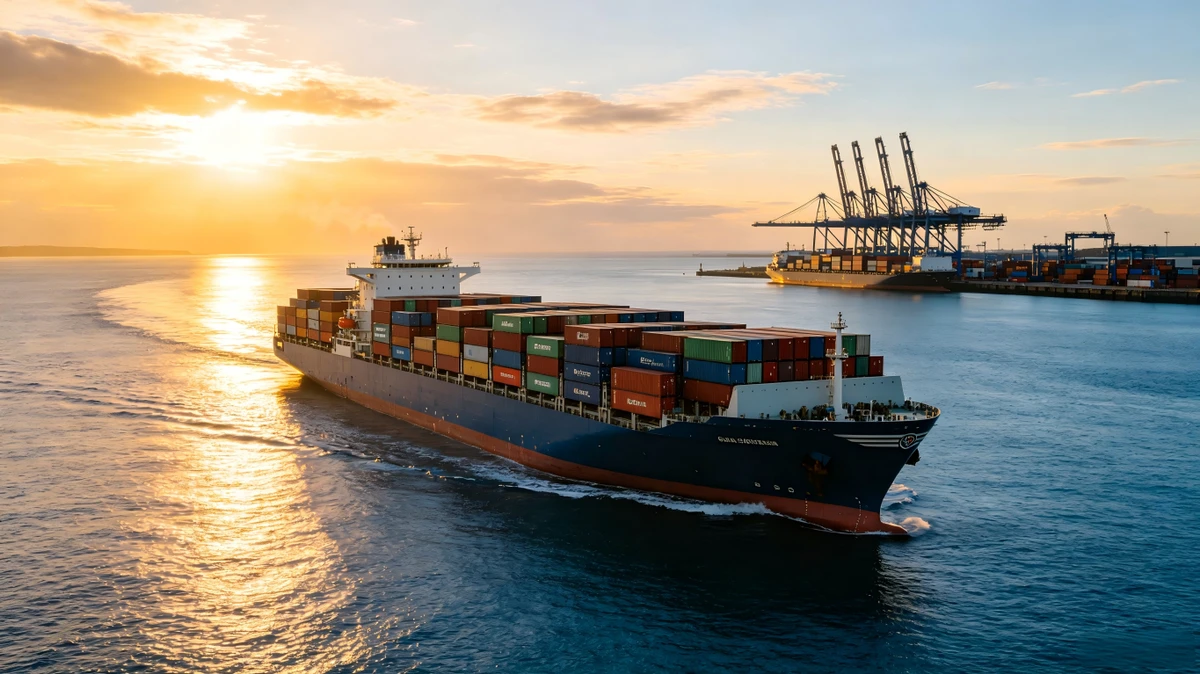
What Is Sea Freight DDP Shipping from China to the UK?
DDP (Delivered Duty Paid) is an international trade term defined under Incoterms 2020. It places maximum responsibility on the seller or freight forwarder. When you choose sea freight DDP from China to the UK, your logistics partner manages:
- Customs Clearance (export) in China
- International ocean freight to the UK
- UK import Customs Clearance through HMRC
- Payment of all Duties and Taxes �?import duty and UK VAT
- Inland haulage and last-mile delivery to your address
Unlike generic DDP guides that mix air, rail, and express options, this article focuses exclusively on ocean shipping under DDP terms �?the most economical choice for bulk importers shipping 2 CBM or more. For smaller or urgent shipments, Air Freight DDP Shipping from China is a faster alternative.
How DDP Differs from DAP, DDU, and FOB
| Incoterm | Who Pays Duty/VAT | Who Handles UK Customs | Best For |
|---|---|---|---|
| DDP | Seller/Forwarder | Forwarder | Hands-off importers, FBA sellers |
| DAP | Buyer | Buyer | UK businesses with their own broker |
| DDU | Buyer | Forwarder ships; buyer clears | Experienced importers with VAT Deferment (e.g., PVA) |
| FOB | Buyer | Buyer | Large importers with full logistics teams |
Under FOB, you’re responsible for booking freight, arranging insurance, and managing UK customs alone. Under DAP, the forwarder delivers to your UK address but leaves you to handle import clearance and tax payment. DDP is the only option where you pay once and receive your goods like a domestic delivery.
Who Should Use Sea Freight DDP?
- B2B importers and wholesalers shipping 2+ CBM of inventory
- Amazon FBA sellers sending stock directly to UK fulfillment centers
- SMEs without an in-house customs broker or EORI number
- First-time importers who want predictable landed costs
At DDPShipping, we specialize in all-inclusive sea freight DDP from China to the UK �?no hidden fees, full customs clearance included, and direct delivery to your door or Amazon warehouse. We also operate dedicated DDP Shipping from China to Europe routes for businesses distributing across the EU.
How Sea Freight DDP Works: The 10-Step Process
Understanding the DDP workflow helps you coordinate with your supplier and forwarder. Here is the complete journey from factory floor to your warehouse:
Step 1: Quote & Booking
You provide your forwarder with cargo details �?product type, weight, dimensions, HS code, pickup city in China, and UK delivery postcode. The forwarder confirms DDP terms and issues an all-inclusive quote.
Step 2: Factory Pickup & Inland Haulage in China
The forwarder arranges a truck to collect your goods from the supplier’s factory and transport them to the nearest port or consolidation warehouse.
Step 3: Export Customs Clearance
Your forwarder submits the export declaration to Chinese customs. Required documents include the commercial invoice, packing list, and export license if applicable.
Step 4: Container Loading
For FCL, the container is loaded at the factory or a nearby yard. For LCL, your cargo is delivered to a Container Freight Station (CFS) where it is consolidated with other shipments into a shared container.
Step 5: Ocean Transit
Your container sails from a major Chinese port �?typically Shanghai, Ningbo, or Shenzhen �?to a UK port such as Southampton, Felixstowe, or London Gateway. Ocean transit alone takes 24�?0 days depending on the route.
Step 6: Pre-Arrival Notification & HMRC Declaration
Before the vessel arrives, your forwarder submits a pre-arrival customs declaration through the UK Customs Declaration Service (CDS). HMRC fully retired the older CHIEF system in 2023, so all import declarations must now use CDS. If your forwarder still references CHIEF, that is a red flag �?they are not operating on the current UK customs infrastructure.
Step 7: UK Import Customs Clearance
HMRC processes the declaration. Most shipments clear customs automatically. Some are selected for examination �?either X-ray scan or physical inspection �?which adds 2�? days.
Step 8: Duty & VAT Payment
Your forwarder pays the import duty (based on your HS code) and 20% UK VAT on your behalf. These costs are already included in your DDP quote.
Step 9: UK Inland Haulage
After clearance, the container is transported by truck or rail from the port to your delivery address, an inland depot, or a Bonded Warehouse where duties are deferred until goods are released.
Step 10: Last-Mile Delivery & Proof of Delivery
For FCL, the container is delivered to your site and unloaded. For LCL, your cargo is deconsolidated and delivered by courier or pallet network. You receive proof of delivery, and the shipment is complete.
Total door-to-door timeline: 25�?0 days depending on route, mode, and customs processing.
Sea Freight DDP Costs from China to UK (June 2026 Rates)
A proper DDP sea freight quote bundles every cost into one predictable figure. Here is how the pricing breaks down and what you should expect to pay in June 2026.
How DDP Pricing Is Built
| Cost Component | What It Covers | Who Pays in DDP |
|---|---|---|
| Ocean freight | Port-to-port shipping | Forwarder (included) |
| Origin charges | THC, documentation, inland haulage in China | Forwarder (included) |
| UK customs clearance | CDS declaration, broker fees | Forwarder (included) |
| Import duty | Based on HS code and CIF value | Forwarder (included) |
| UK VAT | 20% on CIF + duty | Forwarder (included) |
| UK inland haulage | Port to warehouse delivery | Forwarder (included) |
LCL DDP Sea Freight Rates (per CBM)
LCL is ideal for shipments between 1 and 15 CBM. You pay only for the space your cargo occupies.
| Route | DDP Rate per CBM | Transit Time |
|---|---|---|
| Shanghai �?UK | $200 �?$350 | 28�?8 days |
| Ningbo �?UK | $210 �?$360 | 28�?8 days |
| Shenzhen �?UK | $220 �?$380 | 30�?0 days |
LCL rates include consolidation in China, ocean freight, deconsolidation in the UK, customs clearance, duty, VAT, and delivery. Note that LCL carries a minimum billing volume of 1�? CBM even if your cargo is smaller.
FCL DDP Sea Freight Rates (All-Inclusive per Container)
FCL is the better choice once your cargo exceeds approximately 15 CBM. You rent the entire container, and the per-CBM cost drops significantly.
| Container Type | DDP Rate (All-Inclusive) | Transit Time |
|---|---|---|
| 20FT Container | $3,300 �?$4,800 | 25�?5 days |
| 40HQ Container | $5,800 �?$7,500 | 25�?5 days |
FCL DDP rates include the container, ocean freight, origin and destination handling, customs clearance, duty, VAT, and inland delivery to most UK postcodes.
What Affects Your Final Quote
- Product type: General cargo is cheapest. Sensitive goods (electronics with batteries, cosmetics, liquids) may cost 20�?0% more due to extra certifications and handling.
- Origin city: Suppliers inland or far from major ports add trucking costs in China.
- UK delivery postcode: London and the Midlands are standard. Remote areas in Scotland, Wales, or Northern England may add $100–$300.
- Seasonal demand: Peak season (September–January) can push rates up 10�?0%.
- Wooden packaging: Pallets or crates made of untreated wood require fumigation, adding $150–$250.
Rate validity note: Ocean freight rates change weekly based on fuel surcharges, carrier capacity, and geopolitical conditions. Always lock your quote with 2�? week validity.
Disclaimer: All rates, duty percentages, and cost examples in this guide are estimates based on June 2026 market conditions and are provided for informational purposes only. Actual costs depend on your specific cargo, HS codes, carrier availability, and prevailing exchange rates. Always request a formal, itemized quote from your forwarder before booking.
FCL vs. LCL DDP Shipping: Which One Should You Choose?
In our experience managing thousands of China-to-UK DDP shipments, one of the most common questions we hear is: “Should I ship FCL or LCL?” The answer depends on your cargo volume, budget, and risk tolerance.
Quick Definitions
- FCL (Full Container Load): You rent the entire 20FT or 40HQ container. Whether you fill it halfway or to the brim, the price is the same.
- LCL (Less than Container Load): Your cargo shares container space with other shippers. You pay only for the cubic meters you use.
The Break-Even Rule
FCL becomes cheaper per CBM when your cargo reaches approximately 15�?8 CBM. Below that threshold, LCL is usually more economical because you avoid paying for empty container space.
FCL vs. LCL Decision Matrix
| Factor | FCL DDP | LCL DDP |
|---|---|---|
| Best volume | 15+ CBM | 1�?5 CBM |
| Cost per CBM at scale | Lower | Higher |
| Damage risk | Lower (less handling) | Higher (consolidation/deconsolidation) |
| Flexibility | Fixed container size | Pay only for space used |
| Transit time | 25�?5 days | 28�?0 days |
| Security | Seal intact from factory | Multiple handling points |
| Ideal cargo | Furniture, machinery, bulk inventory | E-commerce restocks, samples, accessories |
Cargo-Type Recommendations
Choose FCL for:
- Furniture and home goods
- Automotive parts and machinery
- Construction materials
- Large electronics and appliances
- Any shipment over 15 CBM
Choose LCL for:
- Amazon FBA restocks under 10 CBM
- Fashion accessories and apparel
- Small household goods and kitchenware
- Product samples and trial orders
- Any shipment under 15 CBM
At DDPShipping, we help you calculate the exact break-even point for your cargo and recommend the most cost-effective option.
Transit Times: How Long Does Sea Freight DDP from China to UK Take?
Patience is the trade-off for sea freight’s cost advantage. If speed matters more than cost, explore Air Freight DDP Shipping from China to UK for 5�? day delivery. Here are the realistic sea freight timelines you should plan around.
Typical Door-to-Door Transit Times
| Service | Transit Time |
|---|---|
| FCL DDP | 25�?5 days |
| LCL DDP | 28�?0 days |
Route Breakdown by Port Pair
| China Port �?UK Port | Ocean Transit | Customs + Delivery | Total Door-to-Door |
|---|---|---|---|
| Shanghai �?Southampton | 24�?8 days | 3�? days | 27�?3 days |
| Ningbo �?Felixstowe | 26�?0 days | 3�? days | 29�?5 days |
| Shenzhen �?London Gateway | 25�?9 days | 3�? days | 28�?4 days |
| Qingdao �?Southampton | 28�?2 days | 3�? days | 31�?7 days |
What Can Delay Your Shipment
- Port congestion: Felixstowe and Southampton occasionally experience backlog, especially during Q4 peak season.
- Customs examinations: HMRC selects random shipments for X-ray or physical inspection. This adds 2�? days.
- Peak season backlog: October through January sees the highest volume. Book 4�? weeks ahead.
- Documentation errors: Incorrect HS codes, mismatched invoice values, or missing packing lists trigger holds.
- Cape rerouting: Some sailings now route around the Cape of Good Hope instead of the Suez Canal, adding 10�?4 days to certain services.
How to Protect Your Timeline
- Book your shipment 2�? weeks before you need it to sail, especially in Q4.
- Double-check that your supplier provides accurate commercial invoices and packing lists.
- Confirm your forwarder uses CDS-ready documentation �?the older CHIEF system is obsolete.
- Build a 5�? day buffer into your inventory planning for unexpected delays.
UK Customs, Duties & VAT Under DDP: What Importers Must Know
Even though your forwarder handles customs under DDP, understanding how the costs are calculated helps you verify quotes and avoid nasty surprises.
Who Handles Customs Under DDP?
Your freight forwarder acts as the Importer of Record (IOR) �?or uses your EORI number if you have one. They submit the customs declaration, pay Duties and Taxes, and secure cargo release on your behalf.
Import Duty Explained
UK import duty is calculated as a percentage of your shipment’s CIF value (Cost of goods + Insurance + Freight). The exact percentage depends on your product’s HS code or commodity code.
| Product Category | Typical UK Duty Rate |
|---|---|
| Electronics | 0% �?4% |
| Toys | 2% �?6% |
| Clothing | 8% �?12% |
| Footwear | 10% �?17% |
| Furniture | 0% �?3% |
| Steel / Ceramics | Up to 472.7% (anti-dumping) |
Anti-dumping duties apply to specific categories like steel, solar panels, and ceramics. These can exceed 100% and must be factored into your landed cost.
Additionally, the UK’s CBAM (Carbon Border Adjustment Mechanism), which took effect in January 2026, now applies to imports of steel, cement, ceramics, glass, and fertiliser. If your cargo falls into these categories, your forwarder must report embedded emissions and you may face additional carbon-related charges at the UK border. This is a new compliance layer that many generic shipping guides overlook, but a knowledgeable DDP forwarder will factor it into your landed cost estimate.
UK Import VAT at 20%
According to HMRC, the standard UK import VAT rate is 20%. It is calculated on:
VAT = (CIF Value + Import Duty) × 20%
Example 1 �?Electronics Shipment:
- Goods value (FOB): £8,000
- Freight + insurance: £900
- CIF value: £8,900
- Import duty (3%): £267
- VAT: (£8,900 + £267) × 20% = £1,833
Example 2 �?Furniture Shipment:
- Goods value (FOB): £20,000
- Freight + insurance: £1,500
- CIF value: £21,500
- Import duty (0%): £0
- VAT: £21,500 × 20% = £4,300
Postponed VAT Accounting (PVA)
If you are a UK VAT-registered business, you can use Postponed VAT Accounting (PVA). Instead of paying import VAT upfront, you account for it on your VAT return. This improves cash flow significantly. However, PVA requires your forwarder to set up the declaration correctly in CDS. Not all forwarders support this.
The DDP VAT Trap
Here is a risk many importers miss: if your forwarder is not UK VAT-registered, the import VAT they pay at the border may not be reclaimable by you. That 20% becomes a permanent cost rather than a recoverable tax. Always verify that your DDP forwarder has valid UK VAT registration.
For smaller e-commerce shipments, keep in mind the UK De Minimis Threshold of £135 for commercial goods. Sea freight DDP shipments typically exceed this, but understanding the threshold helps when evaluating sample orders or trial shipments via express courier.
UK Port Selection & Inland Logistics: Where Should Your Container Land?
Choosing the right UK port affects both your transit time and inland delivery cost. Here is how the major ports compare for China imports.
Major UK Container Ports for China Imports
| Port | Location | Best For | Key Advantage |
|---|---|---|---|
| Port of Felixstowe | Suffolk, East England | Midlands, Northern England, Scotland | UK’s busiest container port; frequent Asia services |
| Port of Southampton | Hampshire, South Coast | Southern England, Midlands | Deep-water port; strong rail links to Midlands |
| London Gateway | Essex, Thames Estuary | Greater London, Southeast | Modern automated terminal; fast London access |
| Port of Liverpool | Northwest England | Northern England, Scotland, Wales | Alternative route; avoids southern congestion |
How Port Choice Affects DDP Cost
- Inland haulage distance: The farther your warehouse is from the port, the higher the trucking cost. Felixstowe is ideal for the Midlands; Southampton is better for the South.
- Port congestion: Felixstowe handles the most volume and occasionally faces congestion. Southampton and London Gateway sometimes offer faster clearance during busy periods.
- Rail vs. road: Southampton has strong rail freight connections to the Midlands, which can reduce both cost and carbon footprint for bulk shipments.
Inland Clearance vs. Port Clearance
Some forwarders clear customs while the container is still at the port. Others move it to an inland customs facility first. Port clearance is faster for urgent deliveries. Inland clearance can be cheaper for deliveries far from the coast because the container moves under bond before duties are paid.
At DDPShipping, we route each shipment through the port and clearance method that minimizes both time and cost for your specific delivery postcode. For businesses expanding into mainland Europe, we also provide DDP Shipping from China to Germany and DDP Shipping from China to France.
Essential Documentation for DDP Sea Freight to the UK
Accurate paperwork is the difference between smooth clearance and a container stuck at port for two weeks. Here is what you need.
Documents Your Supplier Must Provide
| Document | Purpose | Critical Details |
|---|---|---|
| Commercial Invoice | Duty/VAT calculation | Accurate value, currency, seller/buyer names |
| Packing List | Customs inspection reference | Weights, dimensions, carton counts per item |
| Certificate of Origin | Preferential duty claims | Required for some trade agreement benefits |
Documents Your Forwarder Handles
| Document | Purpose |
|---|---|
| Bill of Lading (B/L) | Contract of carriage and cargo release |
| Sea Waybill | Alternative to B/L for faster release |
| Export customs declaration | China customs clearance |
| UK CDS declaration | HMRC import entry (replaces CHIEF) |
| Duty/VAT payment receipts | Proof of tax settlement |
Product-Specific Documents
- UKCA conformity certificates: Post-Brexit, most goods require UKCA marking. CE marking alone is no longer sufficient for the UK market.
- Fumigation certificate: Required for wooden pallets or crates made of untreated wood.
- MSDS / dangerous goods declaration: Mandatory for batteries, chemicals, aerosols, and flammable materials.
- Food/cosmetic safety certificates: Required for ingestible and topical products.
DDP Documentation Checklist
Before your cargo ships, confirm you have:
- Commercial invoice with accurate values
- Detailed packing list
- Correct HS codes for every product variant
- UKCA or CE certificate (where applicable)
- Fumigation certificate (for wooden packaging)
- Dangerous goods paperwork (if applicable)
- Your forwarder’s EORI and VAT numbers on file
Amazon FBA Sea Freight DDP from China to UK
Amazon FBA sellers are among the biggest users of DDP sea freight. It allows you to ship inventory directly to UK fulfillment centers without ever handling customs paperwork. Our Warehouse Services cover labeling, palletizing, and delivery appointment booking as part of the DDP package.
Why FBA Sellers Love DDP
- No customs knowledge required
- Predictable all-in cost per shipment
- Direct delivery to Amazon warehouses (LHR, BHX, MAN, EMA)
- No unexpected VAT bills upon arrival
Amazon FBA Compliance Requirements
| Requirement | Specification | Common Mistake |
|---|---|---|
| FNSKU labels | Every single unit must have an FNSKU barcode | Using manufacturer’s barcode instead |
| Amazon shipping labels | Every carton needs an Amazon shipping label | Missing labels on outer cartons |
| Pallet specs | 40×48 inches, ISPM 15 certified, max 72 inches high | Wrong pallet size or uncertified wood |
| Delivery appointment | Booked via Amazon LMS 3�? days in advance | Showing up without a slot |
| Packaging | No Amazon-branded boxes | Using Amazon-logo boxes = instant rejection |
DDP FBA Cost Example
A typical Amazon FBA shipment via sea DDP:
- Product: Kitchen gadgets
- Weight/volume: 500 kg / 8 CBM
- Route: Ningbo �?Felixstowe �?Midlands FBA
- Sea DDP cost: ~$6–$8 per kg (all-inclusive)
- Transit time: 30�?0 days door-to-door
Common FBA DDP Mistakes to Avoid
- Missing FNSKU labels: Amazon will reject the entire shipment at the door.
- Using CE instead of UKCA: HMRC may place a customs hold on non-compliant electronics.
- Box weight over 50 lbs: Amazon charges extra handling fees for overweight cartons.
- Failing to book delivery slots: Unscheduled trucks are turned away, and you pay storage fees while rescheduling.
At DDPShipping, we handle FBA labeling, palletizing, and Amazon delivery appointments as part of our DDP service �?so your inventory lands where it should, when it should.
Real-World Case Studies: DDP Sea Freight in Action
Theory is useful, but real numbers tell the real story. Here are three recent shipments we managed at DDPShipping.
Case Study 1: Small Business First-Time Importer (LCL, 3 CBM)
The client: A UK-based online retailer importing LED lighting accessories for the first time.
The shipment:
- Product: LED lighting accessories
- Volume: 3 CBM
- Route: Shenzhen �?Southampton
- Mode: LCL sea freight DDP
Cost breakdown:
| Cost Item | Amount |
|---|---|
| Sea freight + origin charges | $420 |
| UK customs clearance | $85 |
| Import duty (0% for this HS code) | $0 |
| UK VAT (20%) | $95 |
| UK inland delivery | $65 |
| Total DDP cost | $665 |
Timeline: 32 days door-to-door.
The lesson: The supplier initially provided the wrong HS code, which would have triggered a 6% duty rate and a customs examination. We caught the error during pre-shipment review and saved the client both time and money.
Case Study 2: Amazon FBA Seller (LCL, 8 CBM)
The client: An FBA seller restocking kitchen gadgets ahead of Q4.
The shipment:
- Product: Silicone kitchen tools
- Volume: 8 CBM
- Route: Ningbo �?Felixstowe �?Midlands FBA
- Mode: LCL sea freight DDP
Cost comparison �?DDP vs. DAP:
| Cost Item | DDP (All-Inclusive) | DAP (Buyer Pays Separately) |
|---|---|---|
| Ocean freight + handling | Included | $680 |
| Customs clearance + broker | Included | $120 |
| Import duty (2.5%) | Included | $85 |
| UK VAT (20%) | Included | $720 |
| Inland delivery to FBA | Included | $90 |
| Total | $1,890 | $1,695 |
At first glance, DAP appears cheaper. But the DAP total excludes the administrative time spent managing customs, the risk of VAT miscalculations, and the potential for storage fees if paperwork is delayed. For FBA sellers focused on selling rather than logistics, DDP’s simplicity is worth the modest premium.
Timeline: 35 days door-to-door, with delivery appointment booked 4 days in advance.
Case Study 3: Furniture Wholesaler (FCL, 40HQ)
The client: A wholesale furniture distributor importing a full container of office chairs and desks.
The shipment:
- Product: Office furniture
- Volume: 40HQ container (68 CBM loaded)
- Route: Shanghai �?Southampton
- Mode: FCL sea freight DDP
Cost breakdown:
| Cost Item | Amount |
|---|---|
| FCL ocean freight + origin | $2,450 |
| UK customs clearance | $110 |
| Import duty (0% for furniture) | $0 |
| UK VAT (20% on CIF) | $2,180 |
| UK inland haulage | $180 |
| Total DDP cost | $4,920 |
Cost per CBM: $72 �?roughly 40% cheaper than if the same cargo had been shipped LCL at $200+ per CBM.
Timeline: 28 days door-to-door.
The lesson: At 68 CBM, FCL was the obvious choice. The key was accurate packaging dimensions. The supplier’s initial estimate was 58 CBM, but actual loaded volume was 68 CBM. Had we relied on the estimate, the container would have been overloaded. We always verify dimensions during factory pickup.
Avoiding Hidden Costs & DDP Pitfalls: A Trust Guide
Not every DDP quote is created equal. Here are the red flags that separate professional forwarders from operators cutting corners.
Red Flag 1: Quotes That Exclude VAT or Duty
A true DDP quote includes everything. If a forwarder says “VAT will be calculated separately upon arrival” or “duty is estimated,” they are not offering DDP. They are offering DDU or DAP dressed up in DDP clothing.
Red Flag 2: Forwarders Without UK VAT Registration
If your forwarder cannot provide a valid UK VAT number, any import VAT they pay on your behalf may not be reclaimable. You effectively lose 20% of your shipment’s tax value. Always ask for their VAT registration before booking.
Red Flag 3: Vague “Destination Charges”
Some forwarders quote a temptingly low ocean freight rate, then add unexpected terminal handling fees, storage charges, or deconsolidation fees at the UK port. A trustworthy DDP quote itemizes every cost upfront.
Red Flag 4: Wrong HS Code Classification
Misclassification can lead to overpaid duty, underpaid duty (which risks seizure and penalties), or customs examinations. A professional forwarder reviews your HS codes before shipping, not after a problem arises.
Red Flag 5: No Cargo Insurance Offered
Under Incoterms 2020, risk transfers at the destination under DDP. But who covers loss or damage during the 30-day ocean transit? Reputable forwarders offer cargo insurance as an add-on or include it in premium DDP packages.
How to Vet a DDP Freight Forwarder
Before you hand over your shipment, confirm:
- They have a valid UK EORI number and VAT registration
- They provide a fully itemized quote with no vague line items
- They have experience with your product category and HS codes
- They use the modern CDS system (not the obsolete CHIEF)
- They offer cargo insurance and can explain coverage limits
- They have references from UK-based clients in your industry
At DDPShipping, we are fully transparent about every cost, every document, and every timeline. Our quotes are itemized, our VAT number is verifiable, and our CDS declarations are processed in real time.
When Is the Best Time to Ship? A Seasonal Strategy Calendar
In our experience, timing your shipment correctly can save hundreds of dollars per container and prevent costly stockouts during peak selling periods. Here is how the year breaks down for China-to-UK sea freight.
Q1 (January �?March): The Post-CNY Window
After the Chinese New Year rush subsides, factory production normalizes and ocean rates soften. This is often the best time for budget-conscious importers to lock in favorable rates.
- Rates: Softening, 5�?5% below peak
- Capacity: Abundant
- Best for: Annual planning, large FCL bookings
Q2 (April �?June): The Stable Zone
Rates hold steady, and sailing schedules are reliable. This is the ideal window for regular restocking and building inventory ahead of Q3.
- Rates: Stable
- Capacity: Normal
- Best for: Consistent reorders, new product launches
Q3 (July �?September): Early Peak Season
Importers begin building inventory for Q4. Space tightens, and carriers start announcing rate increases.
- Rates: Rising, especially from mid-August
- Capacity: Tightening
- Best for: Booking before September 15 to lock pre-peak rates
Q4 (October �?December): Peak Season
Christmas inventory drives the highest demand of the year. Rates surge 10�?0%, and port congestion at Felixstowe and Southampton peaks.
- Rates: Highest of the year
- Capacity: Limited
- Best for: Bookings made 4�? weeks in advance
Chinese New Year Impact
Factories in China typically close for 2�? weeks around late January or early February. Production halts, and port operations slow. Plan your shipments at least 6 weeks before CNY to avoid delays.
Actionable Calendar Tip
Book FCL from Ningbo to Southampton by September 15 to lock pre-peak rates and guarantee space for Q4 inventory.
FAQ: Sea Freight DDP from China to UK
What does DDP shipping mean for sea freight? DDP (Delivered Duty Paid) means your freight forwarder handles export clearance, ocean freight, UK customs clearance, duty, VAT, and final delivery. You pay one all-inclusive price and receive your goods at your door.
How much does sea freight DDP from China to the UK cost? In June 2026, LCL DDP costs $200–$380 per CBM, and FCL DDP costs $3,300–$4,800 for a 20FT container or $5,800–$7,500 for a 40HQ container, all-inclusive.
How long does sea freight DDP take from China to the UK? FCL DDP typically takes 25�?5 days door-to-door. LCL DDP takes 28�?0 days due to consolidation and deconsolidation time.
Is VAT included in DDP sea freight? Yes. A genuine DDP quote includes UK import VAT at 20%, calculated on the CIF value plus import duty. The forwarder pays it on your behalf.
What is the difference between DDP and DAP for sea freight? Under DDP, the forwarder pays import duty and VAT and handles all customs clearance. Under DAP, the forwarder delivers to your UK address, but you must clear customs and pay taxes yourself.
Do I need an EORI number for DDP shipping to the UK? Not necessarily. Your forwarder can act as the Importer of Record (IOR) using their own EORI number. However, having your own EORI is recommended if you import regularly.
Can I ship Amazon FBA using sea freight DDP? Yes. Sea freight DDP is one of the most popular methods for FBA sellers. Your forwarder delivers directly to Amazon fulfillment centers, with customs and VAT handled in advance.
What documents are needed for DDP sea freight to the UK? Your supplier must provide a commercial invoice, packing list, and certificate of origin. Your forwarder handles the Bill of Lading, export declaration, UK CDS declaration, and duty/VAT payment receipts.
Is cargo insurance included in DDP sea freight? Not always. While DDP covers delivery costs, cargo insurance for loss or damage during transit is typically an optional add-on. Always confirm coverage with your forwarder.
What happens if my goods are held at UK customs? If HMRC selects your shipment for examination, clearance is delayed by 2�? days. Accurate documentation and correct HS codes minimize the chance of inspection. Your forwarder manages the process and keeps you informed.
Can I use DDP if I don’t have a UK VAT number? Yes. That is one of the main advantages of DDP. Your forwarder uses their VAT registration to clear the goods. Just verify that their VAT number is valid and active.
Why do freight forwarders quote different DDP prices? Forwarders access different carrier contracts, sailing schedules, consolidation networks, and inland haulage rates. Some also include services like cargo insurance or FBA prep; others do not. Always compare itemized quotes.
Are there any products that cannot be shipped DDP to the UK? Most general cargo can ship DDP. Restricted items include weapons, counterfeit goods, certain chemicals, and products that fail UKCA compliance. Dangerous goods require special documentation but can still ship DDP with the right forwarder.
How do Brexit rules affect DDP shipping from China to the UK? Post-Brexit, the UK uses its own tariff schedule (UKGT) and the CDS customs system. UKCA marking replaced CE marking for most goods. A knowledgeable DDP forwarder navigates these rules for you.
How can I reduce my DDP sea freight costs?
- Choose FCL once you exceed 15 CBM
- Ship during Q1 or Q2 when rates are lower
- Consolidate orders to maximize container fill
- Ensure accurate HS codes to avoid unnecessary duty
- Book 3�? weeks ahead to avoid peak season surcharges
Conclusion: Simplify Your China-to-UK Imports with Sea Freight DDP
Sea freight DDP from China to the UK is the most cost-effective, hassle-free way to import bulk goods. You get one all-inclusive price, professional customs clearance, and delivery straight to your warehouse or Amazon FBA center �?without ever touching a customs form.
Here is what to remember:
- Choose LCL for 1�?5 CBM; choose FCL for 15+ CBM. The break-even point is roughly 15 CBM.
- Always verify your forwarder’s UK VAT registration. Otherwise, that 20% VAT may become a permanent cost.
- Plan around peak season (Q4). Book 4�? weeks ahead to avoid rate spikes and port congestion.
- Accurate HS codes and documentation prevent customs holds. A professional forwarder reviews these before shipping.
At DDPShipping, we specialize in sea freight DDP from China to the UK. Our quotes are fully itemized with zero hidden fees. We are UK VAT-registered, CDS-compliant, and experienced in direct Amazon FBA delivery. Whether you are shipping your first container or your fiftieth, we make the process simple.
Ready to ship? Get your personalized sea freight DDP quote from China to the UK in 24 hours �?visit DDPShipping and tell us about your cargo.