
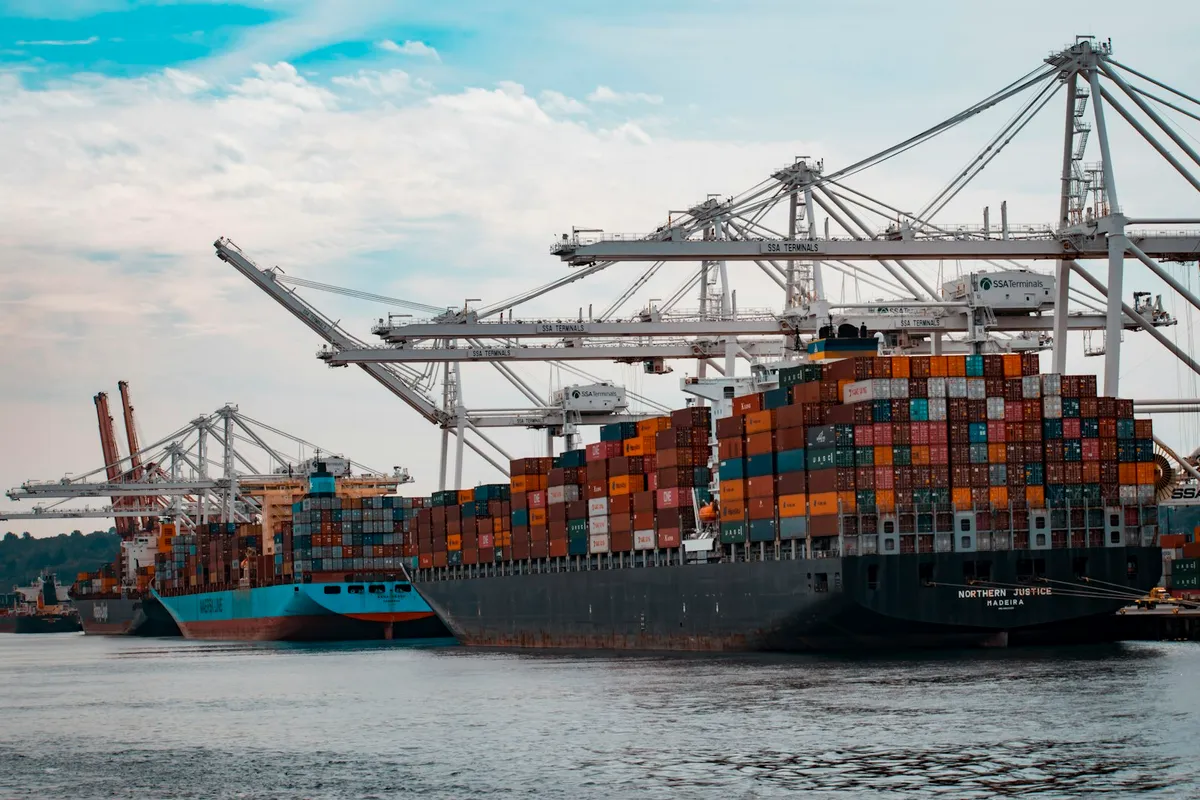
At 12:01 a.m. on September 8, 2026, Canada’s long-announced counter-tariffs snapped into force — and the world’s largest bilateral trading relationship entered a dangerous new phase. Ottawa imposed duties of 15% to 50% on roughly C$27.6 billion (about US$20 billion) of American goods, a dollar-for-dollar retaliation after President Trump’s 50% tariffs on Canadian products went into effect in late August. For importers, manufacturers, and freight forwarders on both sides of the border, the question is no longer whether the trade war disrupts supply chains — it’s who gets the business that used to cross the border. Increasingly, the answer is China. This is what that shift means if you’re shipping into Canada right now.
What Actually Took Effect on September 8
The counter-tariffs mirror the US rates product by product, with duties ranging from 15% to 50% depending on the category. The targets span hundreds of tariff lines concentrated in sectors where US-Canadian supply chains are most deeply intertwined:
- Steel and aluminum — ingots, semi-finished products, and fabricated metal goods at rates up to 50%
- Furniture, mattresses, and household appliances — a direct hit on US manufacturers that have long supplied Canadian retailers
- Clothing, textiles, and footwear — 15–25% duties on American-made apparel
- Dairy products, food, and agricultural equipment — including the categories that triggered Trump’s initial 50% round
- Electronics, pulp and paper, and printing materials — sectors where Ontario and Quebec manufacturing is most exposed
Two details matter for freight planning. First, the tariffs apply by country of origin, not country of shipment — US-origin goods qualify only under the CUSMA marking rules, so transshipment through third countries does not reset the tariff. Second, goods already in transit to Canada before midnight on September 8 are exempt, which triggered a noticeable pre-deadline surge in cross-border trucking and rail volumes during the first week of September.
The retaliation comes on top of duties Canada had already imposed on non-CUSMA-compliant American cars and trucks. Combined with the existing 25% US tariffs on Canadian autos, steel, aluminum, and lumber, the two countries now have layered, overlapping tariff regimes that most trade lawyers say will take months — not weeks — to untangle even if talks resume.
The Response Was Immediate — and Escalatory
Washington’s reaction came within hours. US Trade Representative Jamieson Greer warned of further retaliation and floated the possibility of banning imports of Canadian motorcycles, dairy, and alcohol. President Trump separately threatened to block Bombardier from selling aircraft in the US unless the manufacturer shifts production south of the border — a move Bombardier countered by noting it already works with roughly 2,800 American suppliers across 47 states, from wing production in Texas to flight-control components near Los Angeles.
The economics of escalation are already visible on the ground:
- The Canadian Federation of Independent Business reports that about 40% of its small-business exporter members are selling products now subject to the 50% US tariffs, and expects Canada’s retaliation to hit an even larger share
- Economists across both countries warn the duties will feed directly into consumer prices for clothing, food, and furniture
- Ontario and Quebec — Canada’s manufacturing heartland and most trade-dependent provinces — carry the heaviest exposure
- In a telling sign of the new normal, Canada removed fresh fish and lobster from its tariff list after pushback from its own seafood industry, which depends on sending American-caught lobster north for processing before shipping it back to US consumers
Canadian Prime Minister Mark Carney has vowed to diversify trade away from the US, and July trade data already shows the US share of Canadian exports falling to 66% from a pre-trade-war average of 75%. Where that 9-point share goes is the story freight forwarders are watching.
Why This Pushes Canadian Importers Toward China
When a border you’ve relied on for decades becomes a cost center, sourcing math changes fast. The trade war doesn’t just make US goods more expensive in Canada — it makes the entire North American just-in-time model look fragile to Canadian retailers, distributors, and e-commerce sellers who built their businesses on predictable, tariff-free cross-border flows.
China is the obvious alternative for most of the affected categories. China already dominates global production of furniture, appliances, textiles, electronics, and consumer goods — the exact product groups Canada just tariffed out of the US. For a Canadian importer evaluating suppliers this quarter, the calculus now looks like this:
| Sourcing option | Landed-cost outlook | Supply risk |
|---|---|---|
| US supplier (tariffed) | +15–50% duty on top of price | Escalation risk, retaliation cycles |
| US supplier (CUSMA-compliant) | Lower duty, but narrow categories | Rules-of-origin audits, compliance cost |
| China supplier (DDP) | Stable, all-inclusive landed price | Ocean rate volatility, longer lead time |
| Nearshore (Mexico) | Moderate | CUSMA review pressure, capacity constraints |
The DDP column is where the trade war’s secondary effect lands. Under DDP (Delivered Duty Paid), the seller or its freight forwarder handles ocean freight, Canadian import clearance, duties, and final delivery — with a single quoted, all-inclusive price. When tariff regimes on one border shift monthly, buyers gravitate toward pricing structures that are fixed at quote time rather than adjustable at the border. That’s precisely what DDP shipping from China to Canada offers, and it’s why forwarders serving the Canadian market are reporting a measurable uptick in quote requests from first-time China importers since late August.
The Freight Market Backdrop: Higher, But Navigable
Any importer pivoting to China this quarter needs to understand the rate environment it’s walking into. Transpacific ocean rates are holding near 2026 highs — roughly $7,000 per 40ft container to the US West Coast and $9,000+ to the East Coast — driven by typhoon-related port congestion in East China, Panama Canal transit cuts, and carriers managing capacity aggressively through blank sailings. Full details are in our September freight rates analysis.
Canada-bound cargo shares much of this transpacific infrastructure, but with two practical differences. Vancouver and Prince Rupert remain the primary gateways, and while they are not immune to the congestion rippling out of Shanghai and Ningbo, they are not facing the extreme berth delays seen on the US West Coast. Rates into Vancouver are running at a discount to US West Coast levels in most weeks — a spread that widens whenever US importers bid up capacity into Los Angeles and Long Beach.
For the new wave of Canadian importers, the routing decision usually comes down to three questions:
- Volume. Full-container loads belong in FCL sea freight DDP from China to Canada; smaller or mixed-SKU shipments are usually cheaper as LCL consolidated cargo. Our sea freight DDP guide breaks down both options with current transit times.
- Urgency. If you’re replacing a disrupted US supplier and need stock before the holiday season, air freight DDP from China to Canada can land cargo in 8–12 days door-to-door — at roughly four to six times the ocean rate. With transpacific ocean rates already elevated, that air-sea gap is narrower than it was a year ago.
- Cost certainty. DDP quotes absorb freight, insurance, Canadian duties and GST handling, and delivery into one number. In a market where surcharges — canal fees, congestion fees, peak-season GRIs — appear with little warning, that certainty is worth a premium, which is why we publish a transparent DDP shipping cost breakdown so buyers can compare line by line.
Compliance Notes for New China-to-Canada Importers
If this is your first cycle importing from China into Canada, a few points will keep your cargo out of CBSA delays:
- Proper HS classification — Canada’s tariff schedule is aligned with the WCO Harmonized System, but duty rates vary by code. Under DDP, your forwarder classifies and pays, but you should still verify the codes match your commercial invoices.
- CBSA Assessment and Revenue Management (CARM) — Canada’s new importer system requires registration and posted security. A DDP forwarder with an established CARM account handles this on your behalf.
- Canada’s CUSMA/CPTPP interactions — goods originating in China don’t qualify for preferential tariffs under either agreement, but the general tariff rates on most Chinese consumer goods (0–8%) remain far below the 15–50% rates Canada just imposed on the equivalent US products. The tariff inversion is, frankly, part of the point.
- CFIA requirements — food, supplements, and some consumer products need Canadian Food Inspection Agency clearance in addition to CBSA. Flag these at quoting time, not at the border.
One caution: with demand shifting toward China lanes, we’ve seen brokers quote impossibly low ocean rates with duties “estimated separately.” That’s DAP in a trench coat. A genuine DDP quote lists the duty treatment explicitly and fixes the total. If a quote can’t tell you the landed cost to your Canadian postal code, it isn’t DDP — our guide to DDP shipping terms explains exactly what to demand in writing.
What to Watch Through Q4 2026
The near-term trajectory points to more friction, not less. Greer and Canadian Trade Minister Dominic LeBlanc are expected to hold talks, but no formal negotiation round is scheduled, and both governments are publicly preparing their businesses for a prolonged dispute. Three signals will tell you where this is heading:
- Whether the US follows through on banning Canadian motorcycle, dairy, and alcohol imports — that would signal escalation into consumer categories
- Canada’s Q3 trade data — if the US share of Canadian exports drops below 65%, structural rerouting is underway, and China-bound freight capacity into Vancouver will tighten
- Carrier capacity allocation — if lines begin shifting transpacific capacity from US gateways to Vancouver and Prince Rupert to chase the rerouted demand, book early; capacity follows rate, and rates follow cargo
For Canadian importers, the strategic takeaway is straightforward: the cheapest supplier is no longer the one across the river. It’s the one whose total landed cost — product, freight, duties, delivery — you can lock in writing before the ship sails. That’s what DDP exists for, and it’s why this trade war, however painful for North American supply chains, is a genuine opening for importers willing to build a China lane now rather than wait out a negotiation nobody can schedule.
Get a Fixed DDP Quote for Your Canada-Bound Cargo
DDPShipping runs weekly consolidated and full-container departures from Shanghai, Ningbo, and Shenzhen to Vancouver, Prince Rupert, and Toronto — with Canadian customs clearance, duty payment, and last-mile delivery included in a single fixed quote. Tell us your cargo details and destination postal code, and we’ll send an itemized DDP quote within 24 hours.