
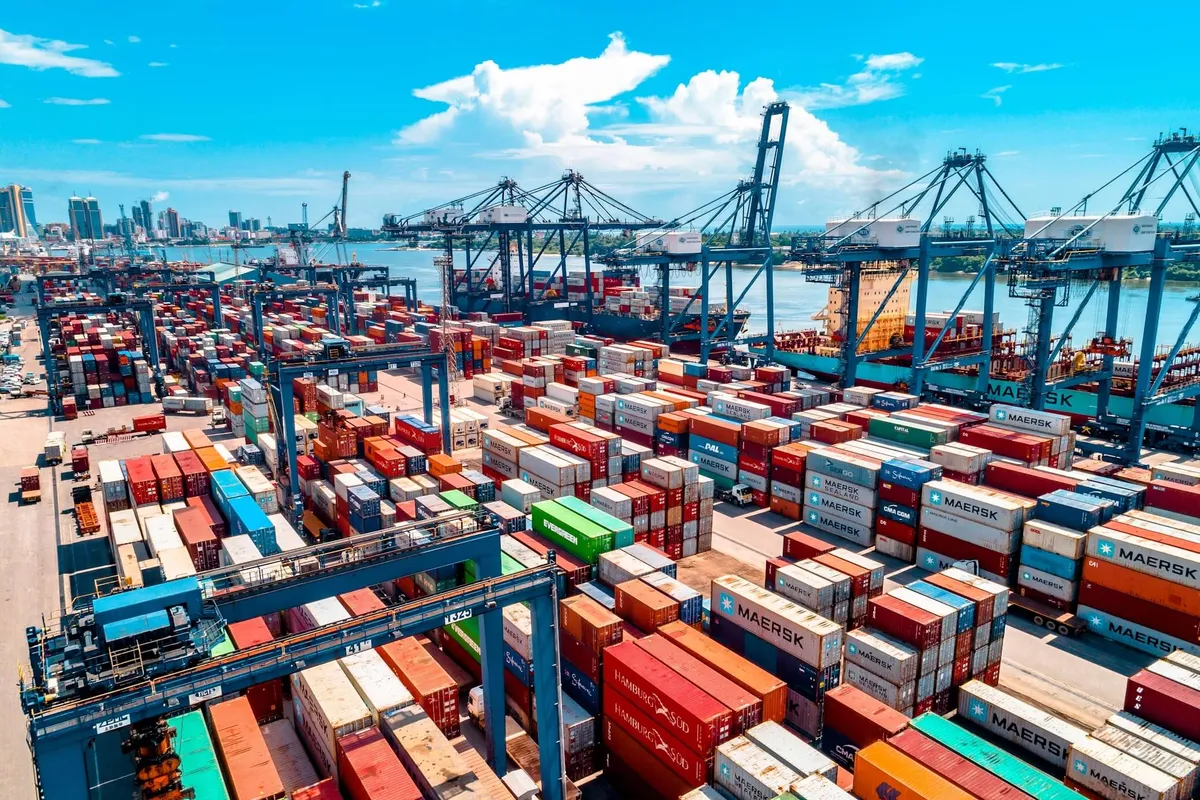
“Just give me a number” is the first thing every importer asks about DDP shipping — and the honest answer is that the number is built from roughly a dozen smaller ones. A DDP (Delivered Duty Paid) quote is not one price. It is a stack of line items: factory pickup, export clearance, international freight, fuel and currency surcharges, destination port charges, customs duty, import VAT, local delivery, and sometimes fees that never appear on the invoice with their real names.
Understanding what each line does — and what it should cost — is the difference between a competitive quote and an expensive surprise. Here is every fee inside a typical DDP shipment from China, with realistic 2026 ranges and the red flags that tell you when a quote is padded.
1. Pickup and Export Handling in China
Before anything crosses an ocean, your cargo has to leave the factory. In a DDP quote this shows up as:
- Factory pickup / trucking: Typically USD 80–300 for a standard truckload within the same province; more for remote inland factories.
- Export customs clearance: Usually USD 30–80 per shipment in China — a formality, but it must be done correctly. A mismatched HS code here can trigger an inspection that costs far more than the clearance itself.
- Export documentation: Commercial invoice, packing list, certificate of origin if requested — often bundled, sometimes itemized at USD 20–50.
Reputable forwarders bundle these into one “origin handling” line. If you see each one itemized with padded amounts, you are being charged for paperwork twice.
2. The International Freight Line (The Big One)
This is 50–70% of your total cost and the line that moves most with the market.
- Sea freight (LCL): Roughly USD 30–80 per cubic meter on China–Europe and China–US routes in 2026, depending on lane and congestion. Transpacific rates spiked to record highs in September 2026, while Asia–Europe eased after carriers returned to the Suez Canal — so the same cargo can price very differently month to month.
- Sea freight (FCL): Around USD 2,500–7,500 per 40ft container lane-dependent, plus peak-season and congestion surcharges.
- Air freight: Roughly USD 3.5–7 per chargeable kilogram from China to major markets; express couriers run USD 6–12/kg door to door.
A word of caution on the freight line itself: many forwarders quote a deliberately low base rate and recover margin through surcharges (see below). Compare the all-in number, not the headline rate. Our DDP shipping cost guide walks through exactly how to read these lines side by side.
3. Surcharges: BAF, CAF, PSS, and Friends
Surcharges are legitimate industry tools, but they are also the favorite hiding place for padded margins. Expect to see some combination of:
- BAF (Bunker Adjustment Factor): Tracks fuel prices — legitimate and formula-based.
- CAF (Currency Adjustment Factor): Covers USD/local-currency swings.
- PSS (Peak Season Surcharge): Applied roughly July–October and before Chinese New Year; on the transpacific in late 2026 it has reached USD 1,000+ per FEU.
- Congestion / emergency surcharges: Common during port disruptions — Typhoon Dolphin’s August 2026 sweep through East China ports, for example, triggered days of delay surcharges at Shanghai and Ningbo.
Each surcharge should trace to a carrier announcement. Ask your forwarder which announcement each one references; a one-sentence answer separates an honest forwarder from a lazy one.
4. Destination Port and Terminal Charges
Once the container lands, the destination side bills its own stack:
- Terminal handling charges (THC): USD 100–300 per container depending on port.
- Destination agent fees: Documentation, delivery order, and release fees — USD 60–150.
- Demurrage and detention: The two classic money pits. Standard free time is about 5–7 days for demurrage and 7–14 for detention; after that, charges compound daily. A shipment that sits unclaimed for ten extra days can add hundreds of dollars.
In a DDP quote these should be fixed and quoted upfront — your forwarder controls the timeline and should absorb schedule risk, not pass it to you.
5. Customs Duty and Import Taxes (The DDP Core)
This is what makes DDP DDP: the seller’s forwarder pays the import duty and taxes on your behalf.
- Customs duty: Calculated as a percentage of the goods’ customs value (usually transaction value). Rates range from 0% on many electronics to 6–12% on typical consumer goods, and significantly higher on categories like textiles into certain markets. Note that US policy in 2026 — including the upheld elimination of the de minimis exemption — has made low-value parcel duty-free shipping a thing of the past, so even small e-commerce parcels now carry duty in the DDP price.
- Import VAT / GST: 19% in Germany, 20% in the UK and France, 10% in Japan, state-dependent in the US. It is levied on the customs value plus duty — a detail many importers miss when sanity-checking a quote.
Ask any DDP forwarder two questions: What duty rate did you assume for my HS code, and on what declared value? A quote that assumes an unrealistically low declared value saves money today and creates customs risk tomorrow.
6. Insurance and Optional Services
- Cargo insurance: Typically 0.3–0.8% of cargo value. Under DDP, your forwarder should either include it or offer it transparently. Given 2026’s congestion-driven damage and delay statistics, skipping it to save half a percent is false economy. DDPShipping offers cargo insurance built into most quotes on request.
- Warehousing, labeling, inspection: If your forwarder consolidates or preps cargo in China, expect USD 20–60 per pallet or cubic meter of handling.
7. Final Delivery to Your Door
The last mile is rarely the last expense:
- Line-haul trucking: USD 150–500 depending on distance from port to inland destination.
- Appointment delivery / liftgate / residential surcharges: USD 40–150 if you don’t have a dock or forklift.
- Amazon FBA delivery: Delivery appointments and FBA labeling add USD 50–200 per shipment.
If you’re deciding between sending one full container or sharing space, our comparison of FCL vs LCL door-to-door shipping shows where the per-unit math actually breaks even.
A Realistic 2026 Example: China to Germany, One Pallet of Consumer Goods
To make this concrete, here is a representative DDP quote for 2 CBM / 350 kg of home goods, Shenzhen to Munich, September 2026:
| Fee | Amount (USD) |
|---|---|
| Pickup + export handling | 160 |
| LCL ocean freight + BAF/CAF | 210 |
| Destination THC + agent fees | 140 |
| Customs duty (6.5% assumed) | 185 |
| Import VAT (19%) | 660 |
| Munich delivery | 210 |
| Total DDP | ≈ 1,565 |
Notice the pattern: freight is only a third of the bill. Taxes and handling dominate — which is exactly why DDP exists, and why a forwarder who handles customs clearance properly saves you more than one who shaves USD 20 off the freight line.
Red Flags That a DDP Quote Is Padded
- A quote with no tax breakdown. If duty and VAT are a black box, you cannot verify them — ask for the assumed rate and declared value in writing.
- Suspiciously cheap freight + vague “local charges at destination.” This is the classic bait structure.
- No demurrage/detention terms. Free time and daily rates must be stated, not discovered.
- Per-fee pricing that never expires. Rates move weekly; a quote valid for 30 days in today’s market is out of date before it is signed.
How to Actually Pay Less — Without Getting Burned
The biggest savings are structural, not negotiated: choose LCL below ~13–15 CBM, ship outside peak season when possible, consolidate suppliers into one shipment, and keep your HS codes accurate so duty is neither overpaid nor under-declared. Our guide to the cheapest door-to-door shipping from China goes deeper on each lever.
At DDPShipping, every quote is itemized exactly this way — freight, surcharges, duty, VAT, delivery — with the assumed duty rate and declared value written in, and no fees that appear only after the container lands. Get a free, line-by-line DDP quote and you will know your real landed cost before your cargo leaves the factory.