
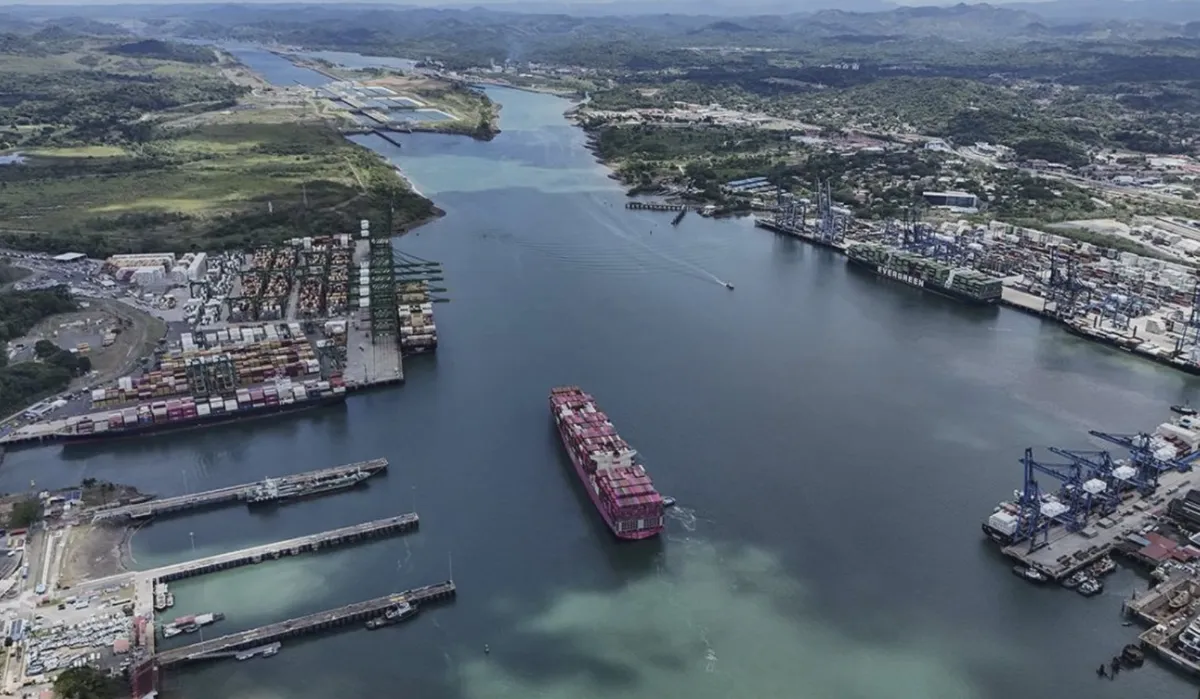
Freight markets are reacting fast to fresh Panama Canal restrictions. On 21 August 2026, the Panama Canal Authority announced that it will cut one daily Neopanamax ship transit from September because drought conditions linked to El Niño have left the canal short of freshwater for its locks. Shippers are already moving cargo ahead of the change, and that front-loading has helped push Asia–US West Coast container spot rates up sharply.
For buyers who rely on sea freight DDP shipping from China, the news matters. DDP prices bundle ocean freight, customs clearance, duties, and final delivery. When the underlying ocean rate jumps, the all-in landed cost moves with it.
What Changed at the Panama Canal?
The Panama Canal Authority said it will reduce the number of daily Neopanamax transits by one from September. The change follows months of low rainfall that have limited the freshwater available to refill the lock system. A strong El Niño weather pattern has worsened the drought, forcing the authority to conserve water by limiting vessel passages.
Neopanamax locks handle the largest container vessels serving Asia–East Coast and Asia–Gulf Coast routes. Fewer daily slots mean longer waits, tighter scheduling, and a greater chance that carriers will reroute cargo through the West Coast or around South America.
Asia–US West Coast Rates Are Already Rising
The market began pricing in the restriction before it takes effect. According to Drewry’s World Container Index, the Shanghai–Los Angeles spot rate climbed 9% week on week to $6,802 per 40 ft container, while Shanghai–New York reached $9,507 per 40 ft. The same report noted that the pace of decline on Asia–North Europe has stalled, suggesting carriers are pulling capacity toward Transpacific lanes.
That is a classic supply-chain feedback loop: a bottleneck at one choke point pushes cargo to an alternative route, and the alternative route gets more expensive until capacity catches up.
Why This Hits DDP Shippers from China Harder
Under a Delivered Duty Paid contract, the seller or forwarder pays freight, duties, taxes, and delivery to the buyer’s door. That gives the importer price certainty, but it also means the forwarder must absorb or pass through any sudden freight spikes.
Three risks are now higher for DDP shipping from China to the USA:
- Cost volatility. Ocean freight is a large share of a DDP quote. If West Coast rates stay elevated, the entire landed cost rises.
- East Coast/Gulf delays. Cargo that normally transits the canal to Savannah, Charleston, Houston, or New York faces longer waits or alternative routings.
- Last-minute rerouting. Forwarders may shift boxes to Los Angeles/Long Beach and use rail/truck to inland destinations. That adds a domestic leg that must also be priced into DDP.
How Shippers Can Adapt
Importers using door-to-door shipping from China can take several practical steps before the September transit cut:
- Book earlier. Lock in FCL or LCL space at least three to four weeks ahead, especially for East Coast and Gulf destinations.
- Consider West Coast discharge. Route cargo through Los Angeles/Long Beach and use inland rail if the canal delay becomes unacceptable.
- Split modes. Time-sensitive stock can move by air freight, while bulk replenishment travels by sea.
- Fix all-inclusive DDP rates. Ask your forwarder for a rate validity window that covers the period after the canal restriction begins.
- Track port congestion. Monitor vessel waiting times at both West Coast and East Coast ports, not just freight rates.
The Bigger Picture for 2026
The Panama Canal is not the only pressure point. Typhoon Dolphin recently forced carriers to skip key Chinese ports, removing roughly half a million TEU of capacity in Asia–Latin America and Asia–Europe trades. Separately, the Red Sea and Suez are still recovering from months of disruption, which has kept vessel schedules fragile.
All of this points to a volatile second half of 2026 for container shipping. For DDP importers, the lesson is the same: the cheapest quote today may not be the cheapest delivered cost tomorrow if routing, congestion, and rate volatility are not managed together.
How DDPShipping Can Help
At DDPShipping, we monitor lane-by-lane rate and congestion data so our customers do not have to. Whether you need FCL or LCL sea freight DDP, air freight alternatives, or a fixed-price door-to-door solution, we can structure a quote that absorbs uncertainty and keeps your China–US supply chain moving.
Contact our team today for a free DDP shipping quote tailored to your route, volume, and delivery timeline.