
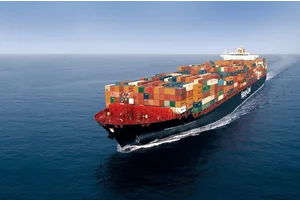
Sea Freight via Hamburg & Koper
FCL and LCL through the gateway that suits the routing — Hamburg and Bremerhaven for most of Czechia, Koper and Trieste for Brno and South Moravia, Gdańsk for Ostrava and Silesia.
One price from your supplier's door to Prague, Brno, Ostrava or Plzeň. Czechia has no seaport, so the cargo moves under T1 from Hamburg, Koper or Gdańsk and clears inland, with EORI, duty and 21% VAT handled in one file.
35-45
Days (Sea Freight)
100%
DDP Service
Landlocked does not mean complicated: pick the gateway by the sailing and the delivery address, move the container sealed under T1, and clear it in Czechia.
FCL and LCL through the gateway that suits the routing — Hamburg and Bremerhaven for most of Czechia, Koper and Trieste for Brno and South Moravia, Gdańsk for Ostrava and Silesia.

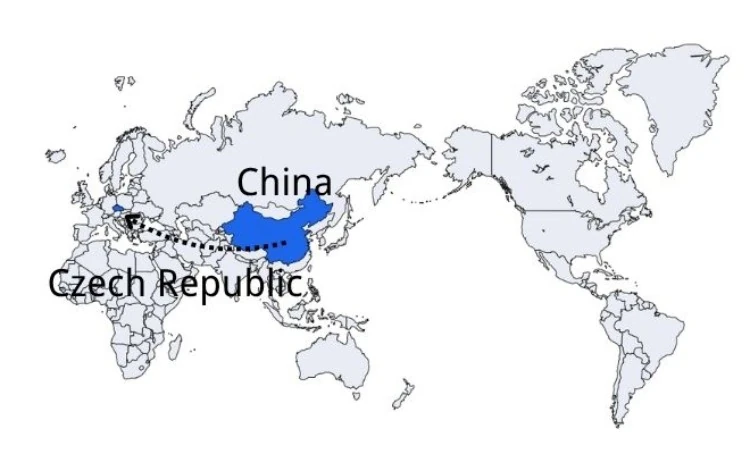
China–Europe block trains entering the EU at Małaszewicze and continuing to Czech terminals, for cargo where ocean transit is too slow and air freight is too expensive.

Cargo into Václav Havel Prague (PRG), the country's main air gateway, cleared on arrival and delivered nationally within days.
Czechia sits in the middle of the EU without a coast, so every import is really two movements: a gateway leg to a foreign port and a transit leg to a Czech customs office. Both have to be booked together.
The container travels sealed from the seaport to a Czech terminal with duty and VAT suspended, and the import declaration is filed in Czechia. That is what lets a Czech importer account for import VAT on their own return instead of financing it at a foreign port.
Hamburg carries the largest share of Czech volume, but Koper can be five to seven days faster for Brno when the service is routing via Suez, and Gdańsk is the shortest inland run to Ostrava. We check the actual sailing instead of defaulting to last year's answer.
Czech importers registered for VAT normally self-assess import VAT on the return, declaring output and claiming input in the same period. We structure the DDP price around that, so 21% does not sit as cash in a customs account for a month.
Sea Freight (via Hamburg)
Rail Freight (Małaszewicze)
Air Freight (Prague)
Clearance & Inland Delivery
The Celní správa České republiky handles customs and the Finanční správa handles tax — one movement, two authorities, and the paperwork has to satisfy both.
A commercial import needs an EORI number, valid across the EU whichever member state issued it. The declaration is filed electronically with the Czech customs administration, either at Prague airport for air cargo or at an inland customs office for a T1 movement.
For sea freight the container moves under T1 from Hamburg, Bremerhaven, Rotterdam, Antwerp, Koper or Gdańsk to a Czech terminal such as Praha-Uhříněves, Brno or Ostrava-Paskov. If the transit document and the guarantee are wrong, the suspension of duty and VAT fails and the goods pay tax at the port.
The standard Czech VAT rate is 21% on the customs value plus duty, with a reduced rate for defined categories. Importers registered for Czech VAT self-assess it on the VAT return, which for a fully taxable business is close to cash neutral — but only if the release for free circulation happens in Czechia.
Products in scope of EU rules need CE marking, a declaration of conformity and the technical file. Consumer-facing labels, instructions and safety information must be in Czech where the product rules require a national language, and we check that at packing stage, not at the border.
Answers for Czech importers, distributors and e-commerce sellers
Commercial invoice with the commodity code, packing list, bill of lading, air waybill or rail consignment note, the T1 transit document for sea freight, the importer's EORI number, and CE conformity documents where the product is regulated. Czech-language labels and instructions are needed for consumer goods in scope.
Yes. The quote covers freight, insurance, gateway handling, the T1 transit, duty on your CN code, 21% import VAT on the customs value plus duty, and final delivery. If you are registered for Czech VAT and self-assess the import VAT, we can quote DDP with VAT unpaid.
Sea freight via Hamburg is 35 to 45 days door to door, rail through Małaszewicze is 18 to 26 days, and air freight to Prague is 6 to 10 days. Clearance and inland delivery add 2 to 5 days depending on the gateway and whether the container is released at the port or inland.
You can, but then the import VAT is declared in Germany and a Czech VAT-registered business cannot claim it on its own return. Clearing inland under T1 keeps the import in your own VAT file, which is usually the difference between a neutral cash flow and 21% tied up for a month.
Yes. Trains entering the EU at Małaszewicze continue to Czech terminals, which makes rail 18 to 26 days against 35 to 45 by sea. Capacity and routing have been less stable in recent years, so we confirm space and the terminal per shipment rather than publish it as a promise.
Not if we act as importer of record and deliver to your address. If the goods must be declared in your own name you need an EORI number — any EU member state's is valid — and Czech VAT registration if you want to recover the 21%.
We accept shipments from 45 kg upward. Below that weight the fixed clearance and documentation cost outweighs the freight saving, so we would rather say so than quote a rate that cannot be delivered.
Share your cargo, CN code and destination in Czechia. You receive an all-in DDP plan covering freight, gateway handling, T1 transit, clearance, duty, 21% VAT and final delivery.
One contact from quotation to delivery at your door in Czechia.
CN code, CE requirements, T1 transit and VAT treatment are checked before booking.
A lane-specific price and transit plan within 24 hours, including the DDP landed cost.