
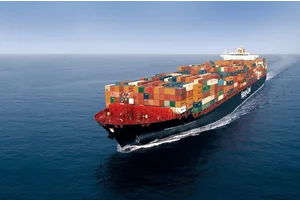
Sea Freight via Dar es Salaam or Beira
FCL and LCL discharged in Dar es Salaam and trucked or railed through Nakonde, or into Beira and up through Zimbabwe to Chirundu, with Lusaka and the Copperbelt as the final legs.
Cargo to Lusaka and the Copperbelt routed through the right seaport, declared in ASYCUDA World, with the transit bond, duty and 16% VAT settled before delivery.
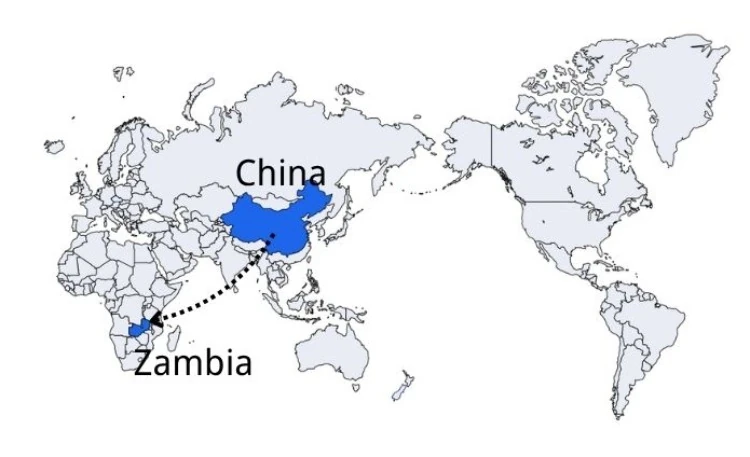
35-50
Days (Sea + Corridor)
100%
DDP Service
A landlocked destination is a corridor decision first and a freight decision second.
FCL and LCL discharged in Dar es Salaam and trucked or railed through Nakonde, or into Beira and up through Zimbabwe to Chirundu, with Lusaka and the Copperbelt as the final legs.

Air cargo (5-8 days) into Kenneth Kaunda International (LUN) or Simon Mwansa Kapwepwe (NLA) for urgent shipments, with Livingstone served through LVI.

We clear through ZRA in ASYCUDA World, lodge the transit bond where the cargo crosses a third country, and arrange the ZABS certificate of conformity before the goods leave China.
Zambia has no coast, so every shipment is also a transit shipment somewhere else. The corridor, the bond and the pre-shipment certificate are decided before the booking, not after the container is on the water.
Dar es Salaam through Nakonde suits Lusaka and the Copperbelt, Beira through Zimbabwe suits the south, Walvis Bay and Durban serve the western and southern borders. We compare corridor cost and dwell rather than defaulting to one port.
Duty follows the Zambian tariff bands on the CIF value, excise applies to defined categories, and VAT at 16% is charged on the duty-paid value. All of it sits inside the DDP price, including the bond fees on the transit leg.
Regulated products need a ZABS certificate of conformity raised in the exporting country, and goods under compulsory standards need ZCSA import clearance. Both are documents that cannot be manufactured at Chirundu or Nakonde.
Via Dar es Salaam / Nakonde (Sea)
Via Beira / Chirundu (Sea)
Via Walvis Bay (Sea)
Lusaka (Air Freight, LUN)
A landlocked import is two declarations in two countries: the transit movement into Zambia, and the import entry filed with ZRA.
Import entries are filed electronically in ASYCUDA World on the single administrative document. Consignments above USD 2,000 CIF must be declared by a licensed clearing agent, and the importer needs a TPIN and a valid tax registration before the entry can be processed.
Cargo crossing Tanzania, Mozambique, Namibia or South Africa moves under a customs bond guaranteed under section 179(2) of the Customs and Excise Act, with electronic bond filing mandatory since July 2023. The bond has to be discharged at the Zambian border post, which is why corridor dwell is quoted separately.
The Zambia Bureau of Standards runs a pre-export verification of conformity programme: regulated products need a certificate of conformity issued in China before shipment. Without it the consignment is held at the border for destination testing, which is where the delay becomes expensive.
The Zambia Compulsory Standards Agency administers over a hundred compulsory standards with its own import quality monitoring, pre-import and annual certification schemes for covered products. Duty follows the tariff bands on CIF, excise applies to defined categories, and VAT at 16% is charged on the duty-paid value.
What importers ask us most often about DDP shipping into Zambia.
Commercial invoice, packing list, bill of lading or air waybill, certificate of origin and, for regulated products, the ZABS certificate of conformity. A licensed clearing agent files the entry in ASYCUDA World, and the transit bond is raised for the corridor leg.
Dar es Salaam through Nakonde is the shortest for Lusaka and the Copperbelt, Beira through Zimbabwe suits southern destinations, and Walvis Bay works well for the western border. We quote each corridor with its own transit time rather than pretending one port fits all.
VAT is 16%, applied to the CIF value plus duty. Duty follows the tariff bands — capital equipment and raw materials lower, finished consumer goods higher — and excise applies to defined categories such as alcohol, tobacco and vehicles. Everything is prepaid under DDP.
For products in the regulated list, yes: the certificate of conformity has to be raised in China before shipment. Goods under compulsory standards also need ZCSA import clearance. We confirm the scope at quotation stage, because neither document can be completed at the border.
Sea freight plus corridor to Lusaka is typically 35-45 days via Dar es Salaam, 38-48 days via Beira and 42-52 days via Walvis Bay. Air freight into Lusaka is 5-8 days door to door. Border dwell is the variable, which is why we quote each corridor separately.
Yes. Ndola, Kitwe and the Copperbelt are standard destinations on the same DDP terms. Cargo continuing to DR Congo, Zimbabwe or Malawi from Zambia is a transit movement with its own bond and is quoted apart from a Zambian import.
Yes, our DDP service starts at 45 kg per shipment. Below that the fixed clearance, bond and certificate cost per kilo outweighs the freight saving, so we would suggest a consolidated option instead.
Send the cargo details, the destination city and your deadline. We reply with a landed cost covering freight, the corridor leg, the bond, ZRA clearance, duty, VAT and final delivery.
One contact from quotation to delivery at your address in Zambia.
We compare Dar es Salaam, Beira and Walvis Bay on total cost and dwell before the booking is made.
A lane-specific price and transit plan within one working day, including the landed cost.