
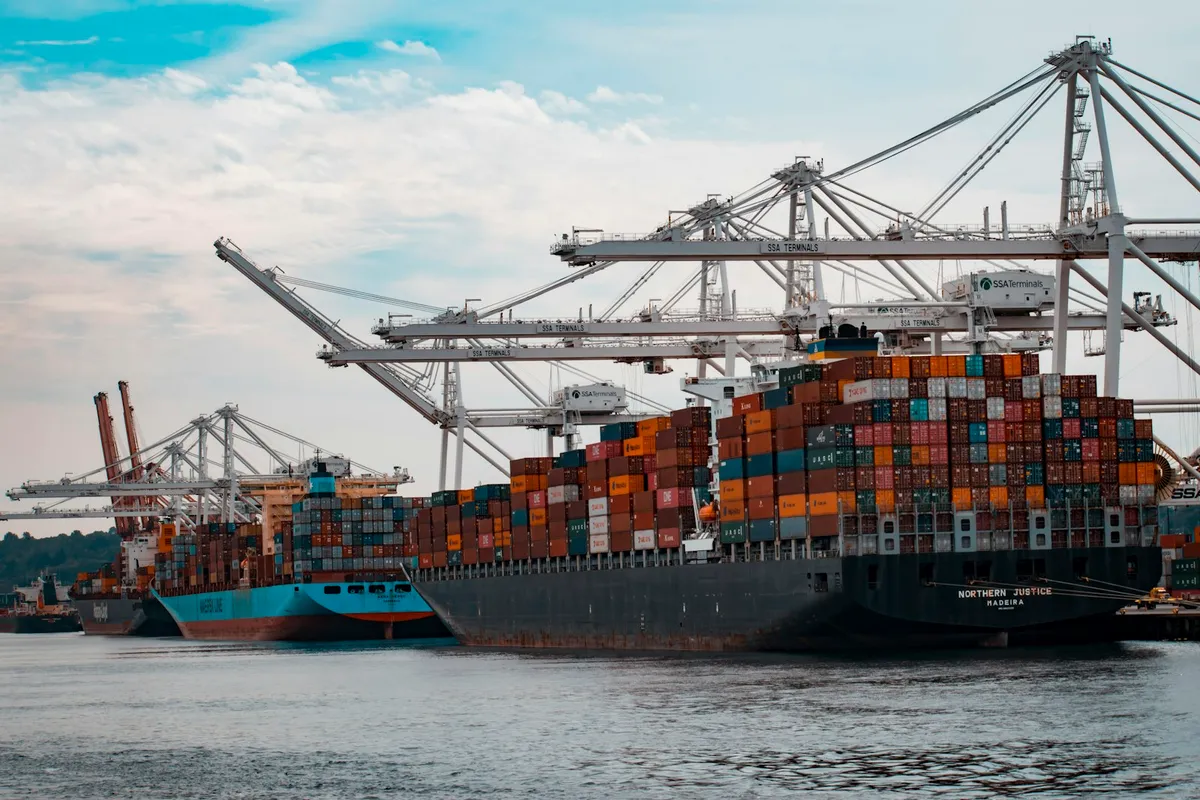
China’s 2026 holiday calendar just dealt global shipping its most compressed crunch window in years. The Mid-Autumn Festival (25–27 September) and the National Day Golden Week (1–7 October) fall back-to-back, leaving factories, terminals and customs only a handful of working days to clear the pre-holiday export surge. The result, as of the week of 21–28 September: record port congestion, an 11% blank sailing rate, carrier capacity cuts announced almost daily, and a peak season surcharge on Asia–US routes that just doubled.
If you import under DDP shipping from China, the next six weeks will separate forwarders who planned from forwarders who are improvising. Here is what actually happened this week, and what to do about it.
The News: What Carriers Announced This Week
The blank-sailing wave we flagged in our September freight rates analysis has hardened into concrete cancellations. As of 28 September 2026:
- Maersk blanked three Asia–Europe sailings: AE15 (first load Qingdao, ETD 28 September), AE12 (Ningbo, 8 October) and AE1 (Shanghai, 10 October) — note that two of these depart after Golden Week ends. On the transpacific, TP8 and TP12 both lose eastbound sailings around 9 October.
- Maersk TPX suspended: the TPX Asia–US West Coast extra loader makes its final sailing from Vung Tau on 29 September (Maersk Boston, voyage 640E) and stays offline through Q4 2026. One fewer string means more competition for every remaining booking.
- MSC cancelled partial weekly departures on its US West Coast Oriental and Pearl services out of Qingdao, Ningbo, Shanghai and Yantian; Hapag-Lloyd trimmed WC2 and AA7 capacity.
- Across all East–West trades, Drewry counts 79 of 721 scheduled sailings blanked between 14 September and 18 October — an 11% cancellation rate, with transpacific services absorbing 52% of the cuts.
Carriers say alternative routings and inducement calls will preserve coverage. Operationally, that means your cargo may still move — but on a different ship, a different week, and not necessarily the one on your booking confirmation.
Congestion by the Numbers
The cancellations are landing on top of congestion that DHL Global Forwarding now measures at close to 4 million TEU tied up in ports worldwide — roughly 12% of effective vessel capacity, a level last seen at the 2022 pandemic peak. The drivers:
- Typhoon-disrupted Chinese ports: July and August closures at Shanghai and Ningbo created backlogs still working through the network. In July, only 21% of vessels calling Shanghai arrived on time.
- Northern Europe: high yard utilisation compounded by low Rhine water levels restricting inland barge connectivity.
- Panama Canal: daily transit slots were cut from 34 to 32 on 15 September, with the Panamax allocation falling from 25 to 23, squeezing Asia–US East Coast routings further.
Rates reflect the squeeze. The SCFI has risen six consecutive weeks to 3,590 points (4 September), up 17.2% since late July, and DHL puts global container rates 143% above a year ago and 36% above June. Market rates ex-China sit near USD 6,765 per FEU to the US West Coast and USD 9,700 to the US East Coast — before surcharges. Schedule reliability, meanwhile, fell to 56.4% in July with late vessels averaging 6.06 days behind, so the transit time on your quote is already a generous assumption.
The Surcharge Stack
Carrier charges are layering on top of record base rates. The headline this week: CMA CGM will impose a USD 4,000 per FEU peak season surcharge on Asia–US routes from 1 October — double its previous level. Hapag-Lloyd has already revised terminal handling charges across multiple regions, and US logistics providers are adding their own peak-season fees on top.
For importers, the lesson is to stop comparing base ocean rates. What matters is total landed cost — freight, surcharges, terminal charges, and the cost of a two-week delay. If you’re rebuilding your budget for Q4, our DDP shipping cost calculator guide walks through exactly which lines to check before you sign anything.
The October Trap Almost Nobody Is Talking About
Here is the twist that makes 2026 different. Sea-Intelligence’s Golden Week analysis shows Asia–North Europe scheduled capacity during the holiday window is actually 27% higher year-on-year — but that’s an illusion. Congestion has bunched delayed vessels together, creating 12 double-sailings across the Golden Week and the following week, as late ships depart at the same time as scheduled ones.
Once that backlog clears, the market hits a demand cliff: factories are closed, export cargo drops sharply, and the gradual return of Suez Canal routings is releasing additional capacity absorbed by Cape detours. Sea-Intelligence’s warning is blunt — expect chaotic, last-minute voyage cancellations and severe schedule instability through mid-to-late October.
In plain terms: late-September schedules are over-promised, and mid-October schedules are placeholders. Treat every booking in that window as conditional until your forwarder confirms a vessel name and voyage number.
Your DDP Playbook for the Next Six Weeks
- Get cargo to the terminal before the holiday wall. Anything not gated in by the end of September will fight for space against the post-holiday restart surge. If your goods aren’t ready, don’t force them into the crunch — a planned 15 October departure may be cheaper and more reliable than a rolled 30 September one.
- Demand a named vessel and voyage on every booking. “Confirmed space” without a voyage number is a waitlist. For bookings touching AE15, AE12, AE1, TP8 or TP12, get the replacement voyage in writing now.
- Add 7–14 days of buffer to every China-origin ETA until mid-November, and price the delay into your inventory plan — not as an exception, as the baseline.
- Split by urgency, not by habit. Critical Q4 stock that must land before mid-November belongs on air freight or premium services; everything else rides ocean. For smaller urgent lots, LCL can dodge the FCL rollover lottery entirely.
- Request itemized quotes with every surcharge listed separately. When a carrier “reserves the right to adjust” peak season charges — and they all do right now — you need to know exactly which lines can move and which are fixed.
Why DDP Wins in a Week Like This
Every disruption above — blank sailings, rerouting, surcharge hikes, customs slowdowns during the holiday — is a cost and a risk that has to land somewhere. Under DDP, it lands on your forwarder, not on you. One quoted door-to-door price, one accountable party, and no surprise invoices for storage, rollover or “adjustments” weeks after the fact.
This is precisely the environment DDPShipping was built for. We confirm vessel and voyage on every booking, monitor carrier advisories daily through the Golden Week window, and re-route proactively when a sailing blanks instead of telling you after the fact. For US-bound Q4 stock, our DDP shipping from China to the USA team is locking confirmed October space this week.
The crunch window runs from now to mid-November. Get a free quote today and we’ll tell you exactly which sailing your cargo gets — not which one we hope it gets.