
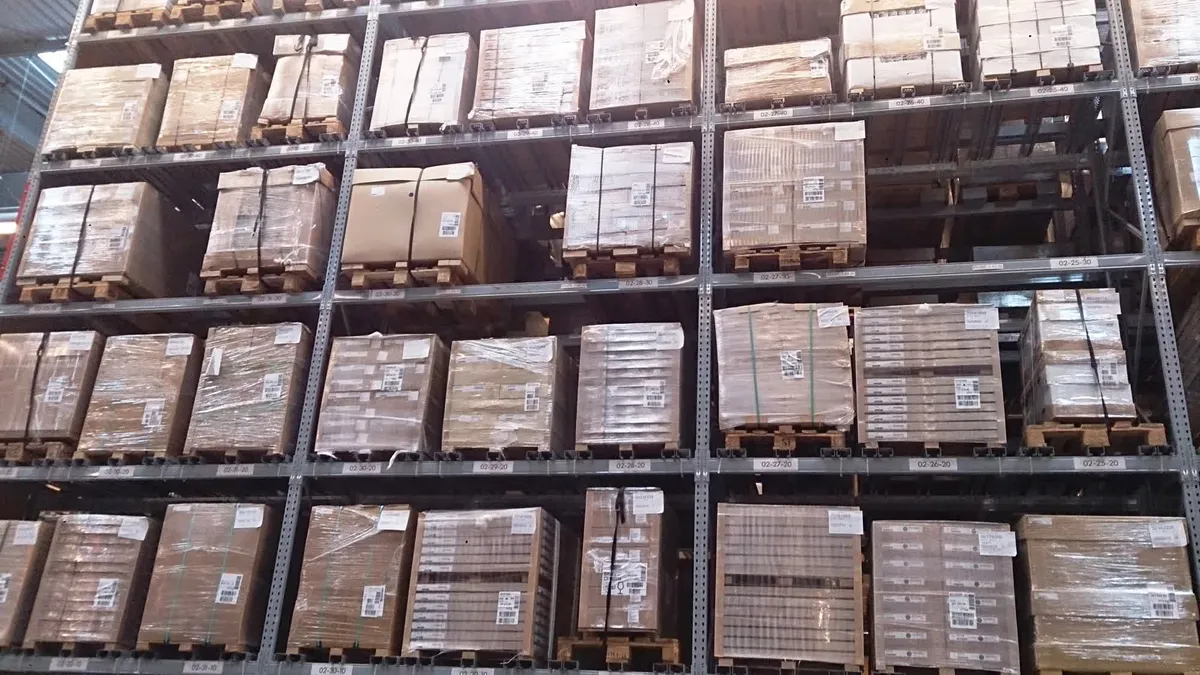
Shipping batteries from China to the USA is the one cargo category where the freight quote is the least interesting part of the job. A lithium pack that is perfectly legal on a vessel is forbidden on a passenger aircraft, and a pack that flies legally can still be refused at the airline counter because the test summary names the wrong model. In 2026 the rules also moved: the 30% state of charge limit, which had applied to standalone cells for a decade, now reaches batteries packed with equipment.
Everything below was checked on 6 November 2026 against the IATA Dangerous Goods Regulations 67th edition (in force 1 January to 31 December 2026), the IMDG Code, PHMSA’s lithium battery guidance, and the current US tariff schedule for heading 8507.60.
What the UN number decides before anything else
Every question about a battery shipment, from price to packaging to which airline will look at it, follows from how the battery is configured. There are four answers and they are not interchangeable.
| Configuration | Lithium-ion | Lithium metal | Air instruction |
|---|---|---|---|
| Cells or packs shipped alone | UN3480 | UN3090 | PI965 / PI968 |
| Packed with equipment, not installed | UN3481 | UN3091 | PI966 / PI969 |
| Contained in, installed in equipment | UN3481 | UN3091 | PI967 / PI970 |
| Sodium-ion, shipped alone | UN3551 | not applicable | PI965-equivalent provisions |
| Battery-powered vehicle | UN3556 to UN3558 | not applicable | Vehicle provisions |
Two classifications get mixed up constantly by sellers. A power bank in the same carton as a phone but not inside the phone is UN3481 packed with equipment, not UN3480. A replacement pack shipped without a device is UN3480, and that single distinction is the difference between a Section II shipment and a fully regulated one.
The watt-hour rating matters as much as the UN number. Cells above 20 Wh and batteries above 100 Wh leave the small-battery allowances behind and take the full dangerous goods route. Check the marking on the case rather than the supplier’s description: a 26,800 mAh power bank at 3.7 V is about 99 Wh, and the same cell chemistry at 30,000 mAh crosses the line.
What changed for lithium batteries on 1 January 2026
Three changes decide how a 2026 shipment is prepared, and two of them catch suppliers who are still working to last year’s procedures.
| Change | What it means | Who it hits |
|---|---|---|
| 30% state of charge extended to PI966 Section II | Lithium-ion cells and batteries above 2.7 Wh packed with equipment must ship at 30% or less, for air | Equipment sellers shipping spare packs beside the device |
| PI967 unchanged in substance | Batteries installed in equipment: a reduced charge is recommended, not mandated | Sellers of finished devices |
| Lithium Battery Mark phone number | The older mark carrying a telephone number may be used until 31 December 2026; air movements require the mark without it from 1 January 2027 | Anyone with pre-printed cartons |
The PI966 change is the one that breaks shipments. A supplier who charged spare packs to 100% through 2025 will do it again in 2026 unless somebody tells them not to. There is no inspection that catches a charged pack at the airport, so the failure surfaces at the airline’s dangerous goods desk, after the cargo has been trucked to the terminal.
There is a proposal in front of PHMSA, published in February 2026, to widen state of charge requirements by air for certain lithium and sodium-ion batteries. It is a proposal. Do not plan around it, but do not be surprised by it either.
Can lithium batteries fly from China to the USA at all
Yes, and less often than sellers expect.
Standalone lithium-ion (UN3480) is cargo-aircraft only. It is forbidden on passenger aircraft. Section II, the simplified route that small batteries once used, was removed for standalone cells and batteries in the 63rd edition of the DGR and the transition ended on 31 March 2022. In 2026 a UN3480 air shipment is Section IA or IB with a shipper’s declaration, a Class 9 lithium battery label, the lithium battery mark, UN38.3 evidence and a state of charge no higher than 30%.
The quantity limits are the practical constraint. Section IA allows 35 kg net per package and Section IB allows 10 kg, both cargo aircraft only. Freighter capacity on a lane like Shenzhen to Los Angeles is finite and shared with everything else that cannot fly on a passenger deck, which is why battery air rates carry a premium and why a Thursday booking for Monday usually does not happen.
Batteries in equipment (UN3481) is the route that still flies easily. Under PI967 within the limits, you need the lithium battery mark and the waybill statement, not a full declaration. Under PI966 with the 2026 charge rule, the packs are in the same box as the device and the quantity allowances are tighter.
What cannot fly at all: damaged, defective or recalled cells, prototypes without test evidence, and packs whose state of charge cannot be evidenced. A supplier who says “we always ship these by air” is describing 2024, not 2026.
What sea freight requires instead, and why most battery cargo goes by water
Ocean is the default for battery cargo above a few hundred kilos, for three reasons: no state of charge requirement, no cargo-aircraft-only restriction, and a price per unit that air cannot approach.
What sea does require:
- The correct UN number and proper shipping name on the booking request, not on the bill of lading after the fact
- A dangerous goods declaration for the deep-sea leg, and the inland equivalent for the truck or rail leg inside the destination country
- Class 9 labelling and the lithium battery mark per package
- UN38.3 test evidence for the cells, traceable to the model in the shipment
- Packaging that passes the drop, stack and internal short-circuit tests the packing instruction calls for
- Stowage that respects the segregation requirements on the vessel
Two operational realities sit on top. Carriers allocate dangerous goods slots per vessel, so a booking after the allocation is full waits a week. And a container of Class 9 cargo is often a dedicated box rather than a co-load, because consolidators will not mix unknown dangerous goods with general cargo. That is why a 3 CBM battery shipment is sometimes priced closer to a 20ft container than to three cubic metres of LCL.
On transit, our lane data gives air at five to eight days door to door, LCL sea at 24 to 35 days to the West Coast and 39 to 54 to the East Coast, and 14 to 18 days of ocean on Shanghai to Los Angeles by FCL. The LCL guide to the USA breaks the sea clocks down stage by stage.
What the UN38.3 test summary has to prove
UN38.3 is not a certificate. It is a set of eight design tests in the UN Manual of Tests and Criteria: altitude simulation, thermal test, vibration, shock, external short circuit, impact or crush, overcharge and forced discharge. The document that matters is the test summary, and it has to connect to the exact cell or battery model in your carton.
The failures we see are consistent:
- A summary for a different model. The supplier’s pack uses cells from one factory inside a housing from another, and the summary names the cell, not the pack.
- A summary with no laboratory identity. Air carriers increasingly want the testing laboratory named and the report number quoted.
- A summary older than a design change. If the cell, the protection circuit or the housing changed, the old summary describes a product that no longer exists.
Ask your supplier for the summary by model number, in English, with the report number and the laboratory. If the answer is a photograph of a certificate in Chinese, the shipment will be held somewhere expensive.
The US duty stack on a lithium pack in 2026
Duty is where a battery shipment surprises the buyer, because the stack is now 40.9% for most lithium-ion packs of Chinese origin. Every rate below is set by the 10-digit code and the entry date, not the booking date.
| Layer | Authority | Rate | In force |
|---|---|---|---|
| Base rate, HTSUS 8507.60.00 | Column 1 general | 3.4% | Standing |
| Section 301, technology transfer | Heading 9903.91.06 | +25% | Entries on or after 1 January 2026 |
| Section 301, forced labour | Heading 9903.05.31 | +12.5% | Entries on or after 24 July 2026 |
| Total | 40.9% |
Three qualifications belong with that table.
The 25% replaced the 7.5% that non-EV lithium-ion batteries paid under List 4A; it did not add to it. USTR declined to carve out battery types, so cells, modules and finished packs all sit under the same heading. Parts under 8507.90.80 carry the same total through a different 301 line.
The 12.5% forced-labour duty applies to goods of China broadly; batteries appear only on the civil aircraft carve-out, which does nothing for a ground-based pack, and Section 232 does not cover batteries.
Above duty sit the fees: Merchandise Processing Fee at 0.3464%, floor USD 34.58 and ceiling USD 670.86 for fiscal year 2027, and the Harbour Maintenance Fee at 0.125% on ocean entries. There is no de minimis left either: the USD 800 Section 321 exemption is suspended for every mode including mail, so USD 700 of power banks pays duty like any other entry.
One date to watch: the remaining Section 301 exclusions under headings 9903.88.69 and 9903.88.70 expire on 9 November 2026. None covers 8507.60, but a broker claiming an exclusion on a mixed shipment should name the heading and its end date.
Three battery shipments, costed end to end
Freight at 2026 rates, insurance at 0.35% of goods value, duty at 40.9%, MPF at the published floor and cap, HMF on ocean only. Figures are rounded to the cent and the columns add.
Shipment A: 180 kg of power banks, UN3480, 0.9 CBM, invoice USD 9,000.
| Line | Amount |
|---|---|
| Air freight, cargo aircraft only, 180 kg at USD 9.50 | USD 1,710.00 |
| Cargo insurance | USD 31.50 |
| Duty at 40.9% on the CIF value of USD 10,741.50 | USD 4,393.27 |
| Merchandise Processing Fee | USD 37.21 |
| Total charged at import | USD 6,171.98 |
Chargeable weight is 180 kg against 0.9 CBM, so the scale wins and volume is irrelevant. Duty is 2.6 times the freight and there is no VAT recovery in the United States to soften it.
Shipment B: 2.6 CBM of e-bike packs, UN3480, 1,650 kg, invoice USD 22,000.
| Line | Amount |
|---|---|
| LCL ocean freight, all-in per CBM | USD 910.00 |
| Cargo insurance | USD 77.00 |
| Duty at 40.9% on the CIF value of USD 22,987.00 | USD 9,401.68 |
| Merchandise Processing Fee | USD 79.63 |
| Harbour Maintenance Fee at 0.125% | USD 28.73 |
| Total charged at import | USD 10,497.04 |
Freight is 9% of the bill. The packs are usually shipped at a reduced charge anyway for safety rather than regulation, and ocean gives the supplier time to discharge them before loading. Note that the LCL rate here assumes the cargo can be co-loaded, which for Class 9 it often cannot; a dedicated box moves this line toward container pricing.
Shipment C: a 40ft high cube of cells, UN3480, 55 CBM, 18,000 kg, invoice USD 180,000.
| Line | Amount |
|---|---|
| Ocean freight, Shanghai to Los Angeles, spot | USD 8,415.00 |
| Drayage and delivery to the warehouse | USD 1,250.00 |
| Cargo insurance | USD 630.00 |
| Duty at 40.9% on the CIF value of USD 190,295.00 | USD 77,830.65 |
| Merchandise Processing Fee, at the cap | USD 659.18 |
| Harbour Maintenance Fee at 0.125% | USD 237.87 |
| Total charged at import | USD 89,022.70 |
Duty is 43% of the goods value and 87% of the total import bill. At this size the freight conversation is over: the only levers left are the tariff classification, which the importer defends, and whether the goods qualify for anything.
Who signs the dangerous goods declaration under DDP
DDP is a commercial arrangement, not a customs status and certainly not a transport licence. Three different people appear on three different documents:
The shipper signs the dangerous goods declaration and is legally responsible for its accuracy. That is the party handing the cargo to the airline or the line, usually the Chinese supplier or the consolidator acting on its behalf.
The importer of record appears on the CBP entry and needs a bond. If your forwarder clears under its own bond and bills one number, you are not on the entry, which affects your record with CBP and your access to any refund.
The carrier accepts or refuses, and its dangerous goods desk has the final word.
A DDP quote that does not say who signs the DGD and whose bond is used has not described the shipment. Ask both questions in writing, and ask what happens to the cargo if the airline rejects it at the terminal, because that answer is where the real cost sits: a rejected dangerous goods shipment has to be re-packed, re-documented or moved to ocean, and it is sitting in a bonded area on the clock while that happens.
Amazon FBA and battery products
Three things about FBA change when the product contains a battery.
The hazmat review comes first. Amazon requires documentation for battery-containing products before they can be sold, and the review looks at the same UN number and watt-hour facts your forwarder needs. Start it before the purchase order, not after the goods are packed.
Amazon is not the importer of record. A shipment addressed to a fulfilment centre still needs an IOR with a bond, and Amazon will not clear goods or pay duty. Under DAP or DDU terms the cargo arrives with charges outstanding and the delivery is refused, which is the single most expensive mistake in this category and entirely avoidable.
The appointment is unforgiving. A battery shipment that clears customs and then misses its delivery window sits in a warehouse with a dangerous goods storage charge attached. For UN3480 cargo, not every third-party warehouse will take it at all, so confirm the receiving site accepts Class 9 before the container is booked.
What gets a compliant shipment rejected anyway
The rulebook and the receiving desk are two different tests. These are the rejections we see on cargo that was, on paper, compliant:
- State of charge evidence missing. The pack is at 30% but nobody can show it, and the airline asks. A photo of a charger display is not documentation.
- Model mismatch between the summary, the carton and the invoice. Three documents, three descriptions.
- The old lithium battery mark after 31 December 2026. Pre-printed cartons with the telephone number become a rejection overnight.
- Wrong class for the chemistry. Lithium metal at a lithium-ion rate is a misdeclaration, and carriers treat it as one.
- No dangerous goods acceptance at the destination warehouse. The truck arrives and nobody will take the pallet.
How to lower the cost without breaking compliance
Freight is 9% to 20% of a battery import. The tariff and the mode decision are the real money.
- Split the mode. Fly the launch quantity and put the balance on water. A 200 kg air shipment at USD 9.50 per kg costs USD 1,900; the same 200 kg by sea costs a fraction of that and arrives four weeks later.
- Fix the classification before the PO. 8507.60 is the right heading for lithium-ion packs; 8507.90 is parts. A misclassified entry is a duty assessment three years later, with interest.
- Design the carton for the mark, not around it. Cartons that carry the correct lithium battery mark and the UN number printed at packing time cost less than cartons that get over-labelled at a Chinese warehouse.
- Ship at the state of charge you must ship at anyway. A pack at 30% is safer, cheaper to document and legal by air; there is no benefit to a full charge that survives four weeks at sea.
- Ask for the DG slot at booking, not at cut-off. A missed slot is a week, and a week of a container’s demurrage dwarfs any rate difference between two forwarders.
Nine questions to ask a DDP forwarder about batteries
- Which UN number and packing instruction are we shipping under, and who classified it?
- Is the state of charge documented, and to what limit?
- Is the UN38.3 summary in English and traceable to this model?
- Which lane: cargo aircraft, ocean, or a split, and what is the cutoff?
- Who signs the dangerous goods declaration, and whose bond is on the entry?
- Is duty included at my HS code, and is 40.9% the right stack for my product?
- What happens if the airline or the carrier rejects the cargo at the terminal?
- Does the receiving warehouse accept Class 9, and is the storage charge quoted?
- What is excluded: DG surcharges, inspection, re-packing, waiting time?
A forwarder who answers all nine has handled batteries before. One who quotes a per-kilo rate and asks for the invoice value has not.
FAQ
Can I ship lithium batteries from China to the USA by air? Yes, if the configuration allows it. Standalone lithium-ion (UN3480) is cargo aircraft only, at 35 kg or 10 kg net per package depending on Section IA or IB, with a shipper’s declaration and a state of charge of 30% or less. Batteries packed with or contained in equipment (UN3481) can move under Section II within tighter limits.
What is the 30% state of charge rule in 2026? Lithium-ion cells and batteries shipped alone have been limited to 30% state of charge by air since 2016. From 1 January 2026, under IATA DGR 67th edition, batteries above 2.7 Wh packed with equipment under PI966 Section II must also ship at 30% or less. Batteries installed in equipment under PI967 carry it as a recommendation rather than a requirement.
How much duty does a Chinese lithium battery pack pay in 2026? 40.9% for entries on or after 24 July 2026: 3.4% base under HTSUS 8507.60.00, 25% under Section 301 heading 9903.91.06 since 1 January 2026, and 12.5% under the forced-labour Section 301 action heading 9903.05.31. Merchandise Processing Fee and, on ocean entries, the Harbour Maintenance Fee come on top.
Is sea freight cheaper for batteries? Much cheaper and generally easier: the IMDG Code sets no state of charge limit, there is no cargo-aircraft-only rule, and the per-unit cost is a fraction of air. The constraints are time, 24 to 35 days to the West Coast, and the fact that Class 9 cargo often needs a dedicated container.
Do I need a UN38.3 report for every shipment? The cells or batteries must be of a type that passed UN38.3, and the test summary has to be available and traceable to the exact model. It does not have to be attached to each carton, but it does have to exist, in English, with the laboratory and report number, because carriers ask for it during acceptance.
Can Amazon FBA accept battery shipments? Amazon receives battery-containing products, but the product has to pass its hazmat review first, and Amazon does not act as importer of record. The shipment still needs an IOR with a bond, and DAP or DDU terms end in a refused delivery because the duty is unpaid at the dock.
What is the minimum shipment size for batteries under DDP? Our floor is 45 kg. Below that the dangerous goods documentation and handling cost more than the cargo is worth, and there is no parcel route that stays compliant for commercial battery volumes.
What changed about the lithium battery mark in 2026? The older mark carrying a telephone number may continue to be used until 31 December 2026, after which the mark without the number is required. Air movements need the current mark from 1 January 2027. Pre-printed cartons ordered in 2025 are the usual problem.
Getting a battery shipment that clears the first time
Battery freight is decided before the carton is closed: the UN number, the watt-hours, the state of charge and the packing instruction. Get those four right and the rest is ordinary DDP work with an unusual duty rate attached.
Send the battery specification sheet, the packing list with dimensions and the HS code, and say whether the packs ship alone or inside the device. We will name the lane that will accept the cargo, itemise the dangerous goods surcharges, show the duty at 40.9% on its own line with the authority behind it, and put in writing who signs the declaration and whose bond carries the entry. If splitting air and sea is cheaper, we will say so: the duty is now the largest line on the invoice.